When Not to Build a Wall: Problems a Retaining Wall Will Not Fix
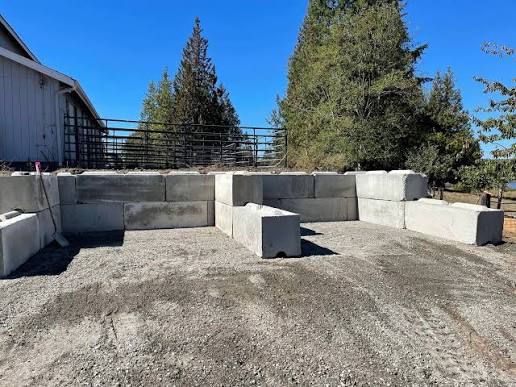
A retaining wall company writing about when not to build a wall may seem like an odd choice, but it is one of the most useful things we can tell you. Walls do one job well: they hold soil back to create level ground or protect a slope. Plenty of yard problems look wall-shaped from a distance and turn out to be something else entirely up close. Building a wall for those problems spends your money and leaves the real trouble untouched, and we would rather talk you out of a wall than sell you the wrong fix.
Start with water that has nothing to do with a slope. If your yard problem is a low area that stays swampy, a foundation that gets wet, or runoff from a roof with nowhere to go, the fix is drainage work, regrading, or gutter changes, not a wall. A wall in the wrong place can even make a water problem worse by blocking the route runoff used to take. When the complaint is wet rather than steep, solve the wet first. Sometimes a wall becomes part of the plan afterward, but it should never be a substitute for giving water a proper path.
Be cautious too when the ground itself is moving in a bigger way. A slope that is slowly sliding, deep cracks opening in the soil above a hillside, trees leaning progressively, or a bank along a creek that is actively being eaten away can point to issues beyond a residential wall's job description. Those situations may call for an engineer's evaluation before anyone talks about blocks. An honest estimator will say so when the signs point that way. A wall built on ground with a deeper problem inherits the problem, and no block size fixes that.
Some problems belong to other trades entirely. A cracked and settling driveway apron may be a concrete issue. A leaning fence is usually a fence issue. Erosion under a deck footing, a failing septic area, or utility trouble in the yard each have their own proper fix and their own proper contractor. Walls interact with all of these things, and a wall plan should respect them, but respecting a problem and being the cure for it are different things. Knowing the difference saves you from paying twice.
There are also walls that should not be built because of where they would sit. If the only workable line for your wall is clearly on a neighbor's ground, or would bury a utility easement, or would send your drainage onto someone else's lot, the project needs rethinking rather than building. Property lines, easements, and local requirements are not fine print to discover afterward. A project that cannot be placed legally and neighborly on your own land is, for now, a project not to build, however much the slope bothers you.
Finally, sometimes the honest answer is simply that the slope is fine. A steep bank that is stable, well-covered with established plants, and not needed as usable ground may be best left alone. Not every hill needs to become a lawn. If you do not need the level space and the ground is not eroding or threatening anything, the cheapest and most durable wall is the one you never build, and your money can go to a part of the property you will actually enjoy improving.
If you are unsure which category your yard falls into, that uncertainty is exactly what a site visit is for. Bring your honest description of the problem, not just the solution you had in mind. Try the wall calculator on the site if a wall does seem to fit, or call (423) 358-2317 for a free estimate. And if the right answer turns out to be no wall at all, a good contractor will tell you that plainly and point you toward the fix that will actually work.
Want to know what your wall takes? Run the wall calculator for a block count, then send your details for a free estimate — no pressure, no obligation.