Weep Holes in a Retaining Wall: Tiny Holes, Big Job
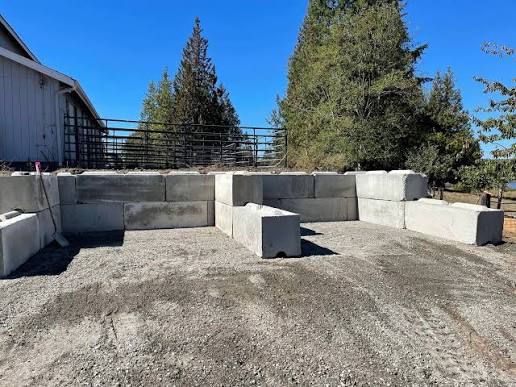
Stand in front of a retaining wall after a hard East Tennessee rain and look low, near the base. On many walls you will see small openings spaced along the bottom course. Those are weep holes, and their job is simple and important. They let water that has collected behind the wall escape to the front, instead of building up pressure in the soil and pushing against the back of the blocks all day and night.
Water is the main reason retaining walls fail. Soil behind a wall acts like a sponge. In our red clay around Knoxville, that sponge holds water for a long time after a storm, and wet soil weighs far more than dry soil. As the ground gets saturated, pressure against the wall climbs. If that water has nowhere to go, it will find a weakness. It pushes blocks forward, forces joints open, carries fine soil out through cracks, and in winter it can freeze and expand in place.
Weep holes are only one part of a drainage system, and they cannot do the whole job alone. Behind a properly built wall there is usually a zone of clean gravel and a perforated drain pipe that collects water and carries it along the back of the wall. The weep holes, or the pipe outlet that daylights at the end of the wall, give that collected water an exit. Without the gravel and pipe, small holes in the face clog quickly with clay and become decoration instead of drainage.
Spacing and placement matter. Weep holes belong low on the wall, close to the base, because that is where water collects and pressure is highest. They need to stay open and above the soil or mulch on the front side so water can actually run out and away. One common problem in East Tennessee yards is landscaping that buries the weep holes over time. Mulch gets piled higher each spring, soil washes down and covers the openings, and plants grow in front of them until the wall is holding water it was designed to release.
Keeping weep holes clear is one of the easiest maintenance jobs a homeowner can do. Walk your wall a few times a year, especially after leaf season and after big storms. Look for openings that are blocked by mud, leaves, or mulch, and clear them gently by hand. Watch whether water actually weeps out after rain. A wall where every hole stays bone dry during a wet week, with damp soil and staining higher up the face, may have a drainage problem behind it that clearing the holes alone will not fix.
There are also signs that tell you the drainage behind the wall is losing the fight even if the weep holes look open. Look for blocks that are starting to bow or lean in the middle of a run, white mineral staining and damp patches that never dry, soil washing out at joints, and a soggy strip of ground at the top of the wall that stays soft long after the rest of the yard dries. Those are reasons to get the wall looked at sooner rather than later, before a small movement becomes a rebuild.
If you are planning a new wall, ask specifically how water will get out from behind it, where the drain will daylight, and how the outlets will stay clear. Those answers matter more than how the wall looks on the day it is finished. To plan your project, try the wall calculator on easttnretainingwalls.com for a starting estimate, or call (423) 358-2317 for a free estimate. We build with drainage as part of the wall itself, not as an afterthought, because in East Tennessee clay and rain, that is what keeps a wall standing straight.
Want to know what your wall takes? Run the wall calculator for a block count, then send your details for a free estimate — no pressure, no obligation.