The Best Retaining Wall for East Tennessee Red Clay
Ask what the best retaining wall is for East Tennessee red clay and you will hear a lot of opinions about materials. Timber, small landscape blocks, poured concrete, and large concrete blocks all have their fans. But anyone who has watched walls succeed and fail in this soil will tell you the material is only part of the answer. Red clay punishes weak bases and poor drainage no matter what the wall is made of, and it rewards heavy, well-founded, well-drained construction more than any particular look.
Understand the opponent first. Red clay holds water for days after rain, swells as it soaks it up, and shrinks and cracks as it dries in summer heat. That cycle pushes and releases pressure against a wall over and over, year after year. Clay is also slippery when wet and very heavy when saturated. A wall for this soil needs mass of its own, a base that does not ride on the soft surface layer, and a way to keep water from sitting in the clay directly behind the blocks. Ignore any one of those three and the clay will eventually win.
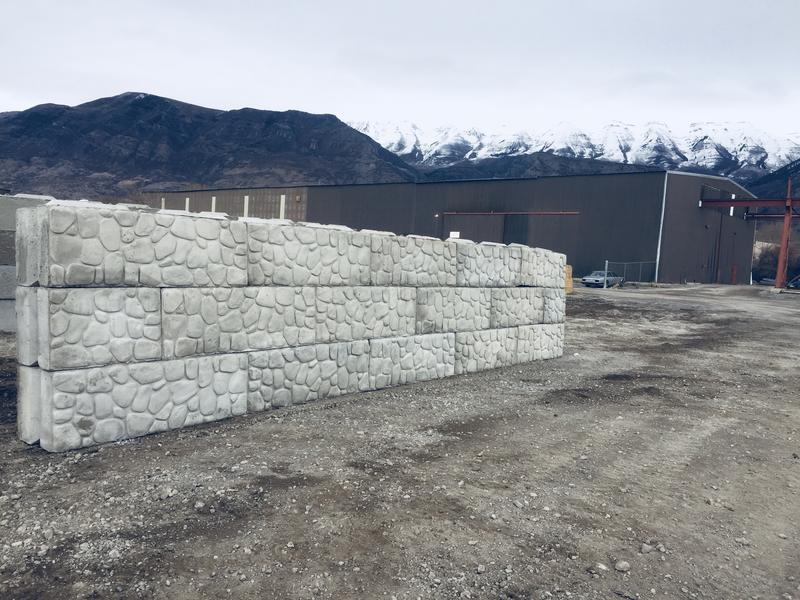
That is why large eco blocks are such a practical fit here. Each block is a big piece of concrete, roughly two feet tall, two feet deep, and four feet long, so every course brings real weight and a wide footprint that resists sliding and tipping better than small, light units. The depth of the block matters in clay country, because the wall does not depend on pins, lips, or a thin face to stay in place. Set on a proper buried base with drainage behind it, a wall of these blocks is built for the kind of push wet clay delivers.
Smaller systems have their place for low, decorative work, but their limits show up fast in clay. Lightweight blocks stacked a few courses high around a planting bed are one thing. Asking the same units to hold back a saturated clay hillside is another, and the familiar sight of a small-block wall bowing and separating after a few winters is usually that mismatch playing out. Timber walls face a different problem in our damp climate. Wood in constant contact with wet clay soil rots from the soil side, fasteners corrode, and a wall that looked solid can be hollow behind the face in surprisingly few years.
Whatever material you choose, judge the wall by the system behind the face. Ask what the base sits on and how deep the first course is buried. Ask what goes behind the wall, and insist on hearing gravel and drain pipe rather than the excavated clay going straight back in. Ask where the water daylights and how surface water above the wall will be handled. In red clay, the right answers to those questions matter more than the choice between finishes, though eco blocks do offer plain and brown finishes plus an optional top cap so the wall can match the house and yard instead of looking like a highway project.
There is one more clay-specific habit worth building into any project. Plan the finished grades so the top of the wall is not a collection point. A shallow swale or a gentle slope away from the wall keeps storm water moving past instead of soaking into the backfill. Keep heavy loads, including parked vehicles and big stockpiles of soil or stone, back from the top edge, especially in wet months when the clay is at its heaviest and weakest. Those small decisions extend the life of any wall in this soil.
If your red clay slope is slumping, eroding, or holding a wall that is already tired, start with measurements of the length and height you need to hold. Try the wall calculator on easttnretainingwalls.com for a starting estimate, or call (423) 358-2317 for a free estimate. We build for this soil every day, with heavy eco blocks, a buried and level base, and drainage designed for clay, and we are happy to explain on site why each of those pieces matters for your particular hillside.
Want to know what your wall takes? Run the wall calculator for a block count, then send your details for a free estimate — no pressure, no obligation.