Surcharge Explained: Why Parking a Truck Above Your Wall Matters
Surcharge is a plain idea hiding behind an engineering word. It means anything sitting on the ground above and behind a retaining wall that adds weight the wall ends up feeling: a parked truck, a loaded trailer, a shed, a hot tub, a stack of firewood, even a big pile of gravel left over from another project. Soil pushes on a wall in a predictable way. Extra loads parked on top of that soil push harder, and sometimes in surprising places.
Think of the ground behind a wall as a wedge that wants to slide down and out. The wall holds that wedge in place. Anything heavy sitting on the wedge presses it down and forward, and the wall feels that pressure, especially when the load sits close to the wall. A truck parked ten feet back is a different situation from the same truck parked with its tires a foot from the top edge, even though nothing about the truck itself changed.
Distance is your friend. As a rule of thumb, loads matter most within a zone that runs back from the wall about as far as the wall is tall. Inside that zone, plan carefully. Outside it, ordinary yard life, mowing, kids playing, a garden, has very little effect on the wall. This is why we ask, during planning, a question that can sound odd: what do you intend to put up there? The answer shapes how the wall should be built.
Driveways are the most common surcharge in East Tennessee, and they are entirely manageable when they are part of the plan from the start. A wall designed to hold a driveway edge is built for vehicle loads near the top. The trouble cases are afterthoughts: a homeowner adds a parking pad, a storage building, or a pool on the level ground above a wall that was only ever meant to hold a lawn. The wall did not change. The job it was handed did, quietly, one weekend project at a time.
Water makes surcharge worse. Saturated clay is heavier than dry clay, and a heavy load on saturated ground after a Knoxville rain pushes with the worst combination a wall sees all year. This is another reason drainage and load planning belong in the same conversation. A drained wall with a sensible parking layout has margin to spare. A wet wall with a loaded trailer at its edge is spending margin it may not have.
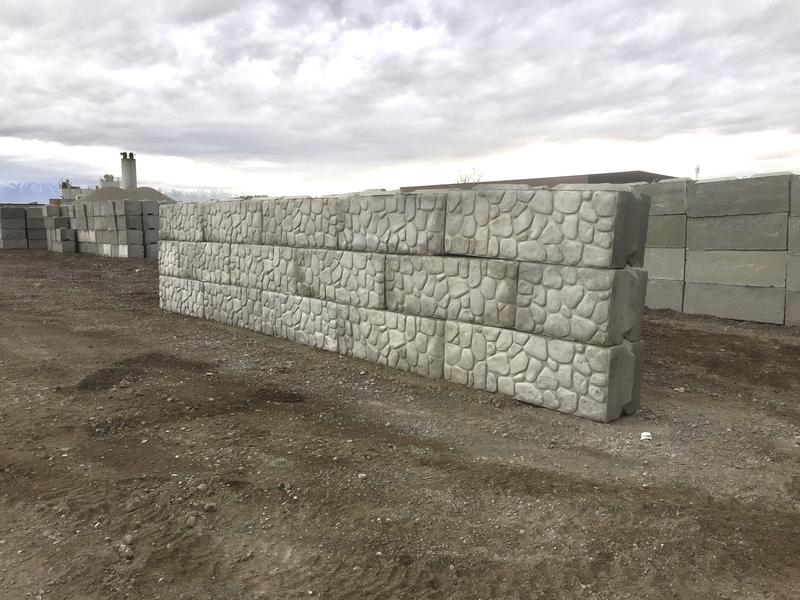
Eco blocks bring a lot of mass to this problem, each one roughly two feet tall, two deep, and four long, and a well-based eco block wall handles normal residential loads comfortably. But no wall should be treated as infinitely strong. If you are planning something new above an existing wall, a heavy structure, a pool, a big shed, an RV pad, it is worth a conversation before it goes in, not after cracks or leaning give you the news the hard way.
When you walk your own lot, do a simple surcharge inventory. What sits above each wall today, and what might sit there in five years? If the honest answer includes vehicles or structures close to the edge, make sure the wall was, or will be, built with that life in mind. Walls forgive a lot, but they keep faithful accounts of the weight they carry, and they always collect eventually.
If you are planning a wall, try the wall calculator on the site to size up your project, or call (423) 358-2317 for a free estimate. We build eco block retaining walls across East Tennessee, and we are glad to walk a lot with you and talk through drainage, layout, and finish before any work starts.
Want to know what your wall takes? Run the wall calculator for a block count, then send your details for a free estimate — no pressure, no obligation.