Small Walls, Big Difference: One-Course Borders and Bed Walls
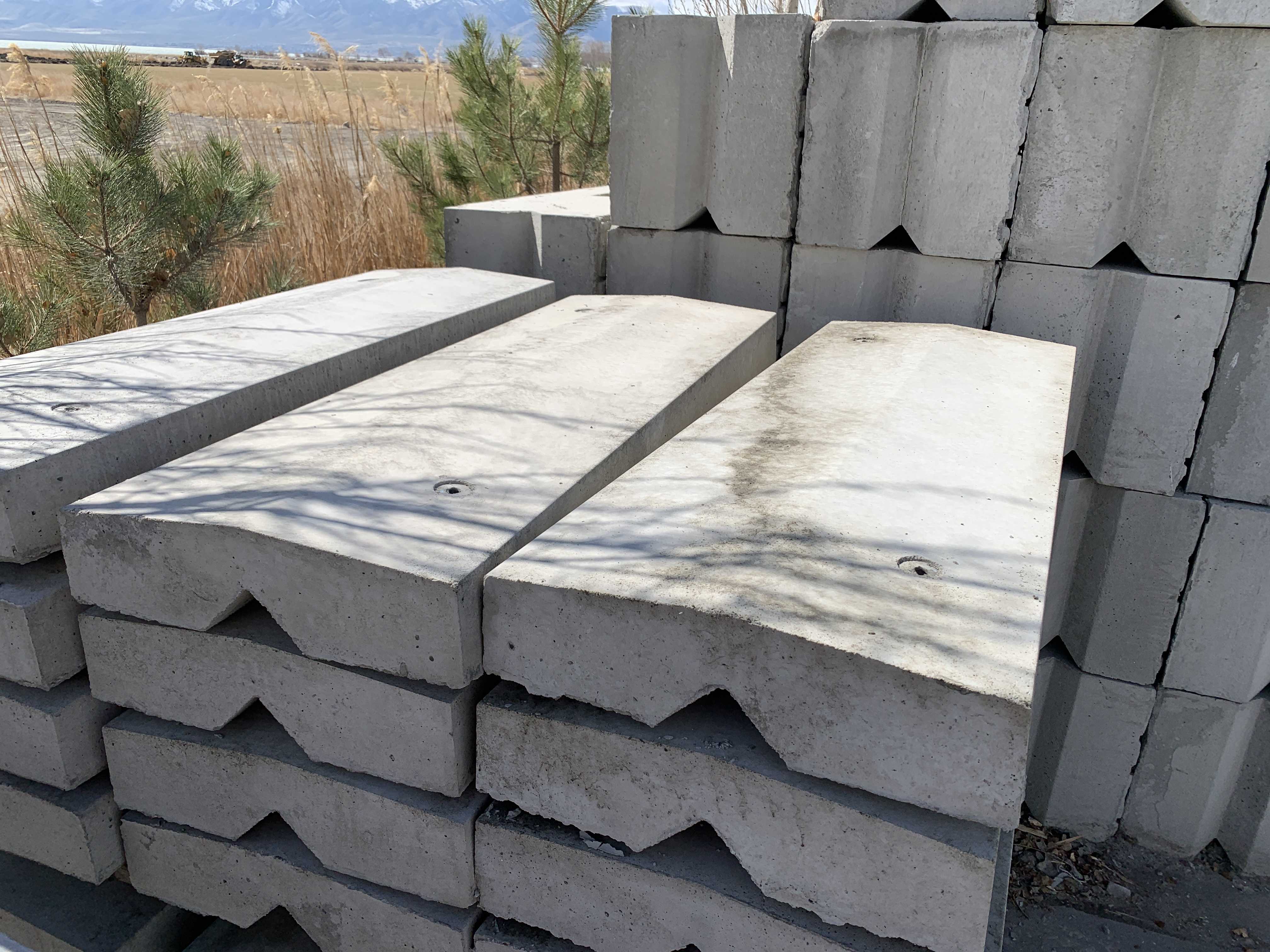
Not every retaining wall is a tall structure holding back a hillside. Some of the most satisfying walls we see are just one course high, doing the quiet work of a border that finally stays put. On gentle East Tennessee grades, a single course of big eco blocks can define a planting bed, hold mulch where it belongs, separate lawn from landscape, and give the whole front of a house a finished look that flimsy edging never quite achieves.
The difference comes down to mass and stability. Thin metal edging bends and heaves, small stacked stones wander, and timber borders rot out in our wet climate within a handful of years. A one-course eco block border is made of blocks roughly two feet by two feet by four feet, seated on a prepared, level base with part of the block below grade. That weight does not creep downhill, kick out when the mower bumps it, or need re-setting every spring. It goes in straight and stays straight.
A low bed wall also changes how the bed itself behaves. Soil and mulch on even a mild slope migrate with every rain, thinning out at the top of the bed and piling against whatever stops them at the bottom. A level course of block stops that slow slide, so mulch stays at an even depth and plant roots are not half-exposed by August. Water soaks into a bed held level instead of sheeting off it, which matters during the dry stretches of a Tennessee summer when every rain should count.
One-course walls are also a friendly way to handle small grade changes that are too much for edging and too little for a full wall. A foot or so of drop across a front bed, a side yard that tilts toward the driveway, or a garden corner that keeps washing into a walkway are all fair game. Where the grade changes along the run, the wall can step up to two courses for a stretch and drop back down, following the ground instead of fighting it. Stepped lines look intentional, because they are.
Looks matter at this scale, since a border wall lives right where people see it up close. Eco blocks come in plain and brown finishes, and even a one-course wall can take a top cap finish for a clean upper edge that reads as a deliberate design choice rather than a construction leftover. The cap also gives you a comfortable edge to sit on while you weed, which is a small thing until you have spent a Saturday working a long bed.
Keep the usual common sense in place even on a small job. The base still needs to be level and below grade, drainage still matters if the bed sits where roof runoff lands, and the wall line should respect property boundaries just like a tall wall would. Small walls forgive more than tall ones, but they reward the same care. Downspouts, in particular, should never pour directly behind any wall, no matter how low it is.
A one-course wall can also be a sensible first phase for a bigger plan. Homeowners sometimes start with the front beds, live with the look for a season, and then carry the same block and finish around the side yard or into a back garden terrace the following year. Because the blocks are uniform, a second phase ties into the first cleanly, and the yard gains a consistent line instead of a patchwork of edging materials collected over the years.
If your yard has beds that will not stay put or a gentle slope that needs a clean edge, measure the length and the drop before you assume the job is either tiny or huge. Try the wall calculator on the site for a first sense of scale, or call (423) 358-2317 for a free estimate. Sometimes the wall that changes a yard the most is the shortest one in it.
Want to know what your wall takes? Run the wall calculator for a block count, then send your details for a free estimate — no pressure, no obligation.