Segmental Block Retaining Walls vs. Eco Blocks: Which Fits Your East Tennessee Yard?
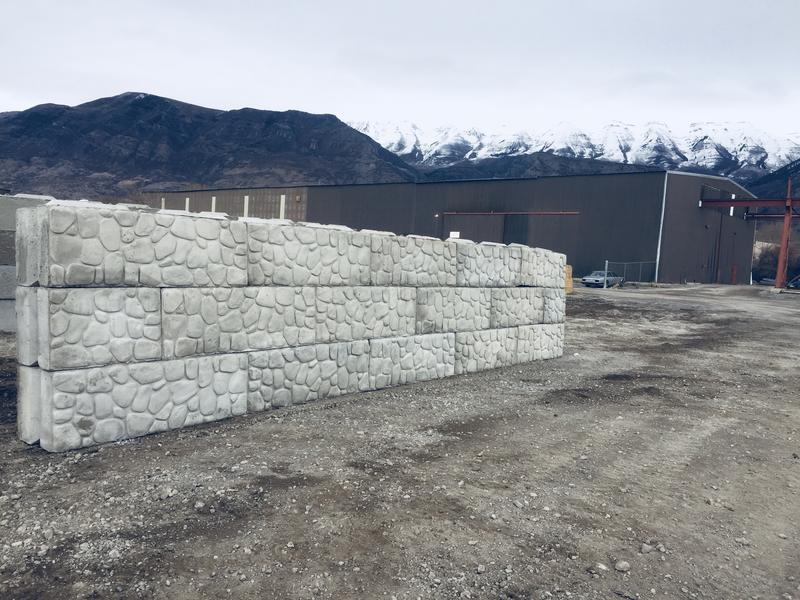
If you have been reading about retaining walls, you have probably run into the term segmental block retaining wall. It sounds technical, but it simply describes a wall built from many smaller concrete blocks that stack and lock together, usually without mortar. They are a common sight around Knoxville — in front yards, along driveways, and around commercial parking lots all over East Tennessee.
Segmental blocks have real strengths. They come in a lot of colors and face patterns, they work well for shorter garden and landscape walls, and a good crew can curve them around beds and corners in ways that look polished. For a low wall holding back a planting bed or leveling a small corner of a yard, they can be a sensible choice.
The trade-offs show up as the wall gets taller, the slope gets steeper, or the soil gets heavier. A segmental wall is only as strong as the combined work of hundreds of individual pieces, the compacted base under them, and the backfill behind them. Here in East Tennessee, our red clay holds water, swells when it is wet, and pushes hard against a wall after a heavy rain. Every joint in a segmental wall is a place where that pressure, shifting soil, or a freeze-and-thaw cycle can start to move one block, then the next.
That is the main difference with an eco block retaining wall. Instead of hundreds of small pieces, an eco block wall is built from big concrete blocks that measure roughly two feet by two feet by four feet each. Each block carries serious weight on its own, so the wall resists soil pressure with mass, not just with careful stacking. Fewer pieces also means fewer joints to shift, and a faster, simpler build for tall or load-bearing walls.
Think about it in terms of the job you need done. If you want a short decorative wall around a flower bed, segmental blocks give you plenty of style options. If you need to hold back a hillside, flatten a sloped yard for usable space, support the edge of a driveway, or replace a failing railroad-tie or stone wall, the job is structural first and decorative second. That is where large eco blocks tend to be the more practical fit for East Tennessee properties.
Drainage matters just as much as the block you choose, no matter which style you pick. Water trapped behind any retaining wall adds weight and pressure, and it is the number one reason walls lean, bulge, or fail early. A proper build gives that water a way out — clean gravel backfill behind the wall and a drainage path at the base so water is not sitting against the concrete after every Knoxville downpour. Ask any builder you talk to how they handle drainage before you ask about colors or finishes.
Appearance is the other fair question. Segmental blocks are marketed on looks, and eco blocks used to have a reputation for looking plain and industrial. That has changed. Our eco blocks come in three finishes: plain for a clean, simple look, brown for a warmer tone that blends with East Tennessee soil and stone, and a top cap finish that gives the top edge of the wall a finished line. On a big structural wall, most homeowners find that a clean, straight, capped wall looks better than a decorative wall that has started to lean.
Maintenance is different, too. With a segmental wall, upkeep often means watching for individual blocks that have shifted, caps that have come loose, and joints that have opened up. With an eco block wall, there are far fewer pieces to check, and the seasonal routine is mostly about keeping drainage clear, watching the soil line at the top of the wall, and making sure downspouts are not dumping roof water behind it.
Cost questions are understandable, but the honest answer depends on your site — the height and length of the wall, access for equipment, how much excavation and drainage work is needed, and what the soil looks like once digging starts. That is exactly why we do not quote a one-size-fits-all number online. Start with our lead-gated wall calculator on this site to get a rough block count for your project, then we can talk through your specific yard on a free estimate.
One last step people forget: finishing the ground around the new wall. Construction disturbs the soil above and below the wall, and bare East Tennessee dirt washes fast in a hard rain. Once the wall is in, the bare soil around it needs cover fast — Knoxville hydroseeding can spray it in a day, giving you grass cover that helps hold the surface in place while the site settles.
If you are weighing segmental blocks against eco blocks for a wall in Knoxville or anywhere in East Tennessee, tell us what the wall has to hold back and how tall it needs to be. Try the wall calculator for a block count, then call (423) 358-2317 for a free estimate. We will help you pick the wall that fits the job — not just the one that looks good in a brochure.
Want to know what your wall takes? Run the wall calculator for a block count, then send your details for a free estimate — no pressure, no obligation.