Retaining Walls in Oak Ridge and Clinton: Ridge-and-Valley Yards
If you live in Oak Ridge or Clinton, the shape of your yard was decided a long time ago by the ridges that run through this part of East Tennessee. Streets follow the valleys and climb the ridges, houses sit on ground that was cut into a slope or filled out over one, and very few lots are naturally flat. That ridge-and-valley character is part of what makes Anderson County pretty, and it is also why retaining walls are close to a standard feature on homes here rather than an unusual project.
The typical yard problem comes in a few familiar forms. The backyard drops away behind the house, leaving a slope too steep to mow comfortably and too steep for kids or dogs to use well. The driveway was cut into the ridge, so a raw bank stands beside it, shedding soil and rock after storms. Or the house pad was leveled by filling, and the filled edge slowly creeps and erodes at the property line. Each of these is a wall-shaped problem, and each one is better handled with a planned wall than with years of patching the slope.
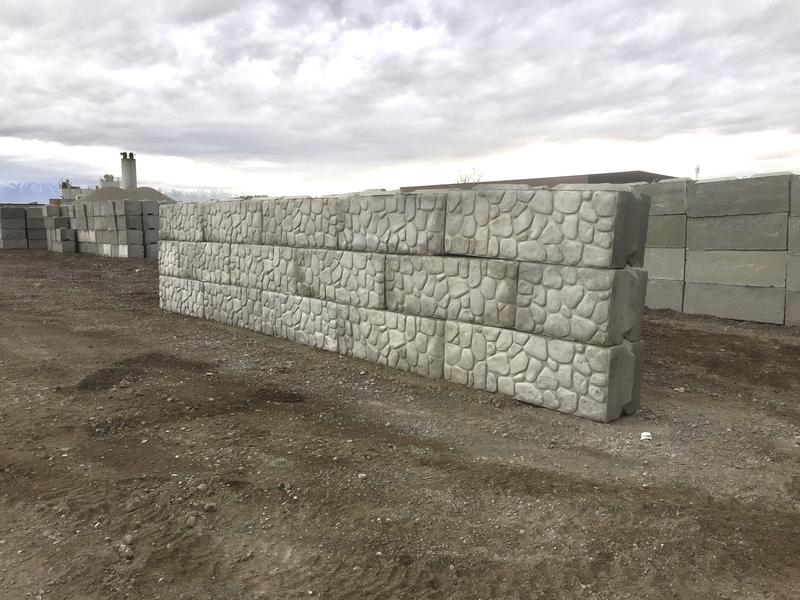
Soil and rock deserve a mention in this area. Digging on a ridge can mean clay in one spot, cherty soil in another, and rock closer to the surface than you expected. That is not a reason to avoid a wall, but it is a reason the site visit matters, because the footing and drainage plan should match what is actually in the ground. Eco blocks, at roughly two feet by two feet by four feet each, sit on a prepared base below grade, and a crew that knows local ground can judge how much excavation a given ridge lot will really take.
Drainage on a ridge lot runs in long lines. Water coming off the high side of a property may travel from well above your yard, pass across it, and head for the valley floor, which means a wall plan here should look beyond your own roof and driveway. Where does water enter, where will the wall outlet send it, and does the route still make sense at the bottom of the ridge? Walls that answer those questions behave well. Walls that only interrupt a slope, without giving its water a new route, tend to move the problem rather than solve it.
Terracing is often the natural fit for ridge yards. Instead of one tall wall fighting the whole slope, two shorter walls with a level band between them follow the way the land already wants to step down. The middle band becomes garden, lawn, or a path, and each wall stays at a comfortable scale for a residential lot. Finish choices help the walls blend into wooded ridge lots especially well: the brown finish sits quietly against trees and leaf litter, the plain finish suits a more open lot, and a top cap finish ties the top edge together.
Once the walls are in and the disturbed ground is ready to be grassed over again, many ridge-lot owners finish the job with seeding help from a service like Knoxville hydroseeding so the new level areas green up evenly instead of washing in the first hard rain. However you handle that last step, plan it as part of the project rather than an afterthought, because bare graded ground on a ridge will not wait politely for spring.
If your Oak Ridge or Clinton yard has a slope that limits how you live on your lot, start with photos and a rough measure of the drop. Try the wall calculator on the site to size the wall your ridge calls for, or call (423) 358-2317 for a free estimate. Ridge-and-valley ground is never going to be flat on its own, but a well-planned wall can give you flat ground where it counts.
Want to know what your wall takes? Run the wall calculator for a block count, then send your details for a free estimate — no pressure, no obligation.