Retaining Walls in Knoxville, TN: What to Know Before You Build
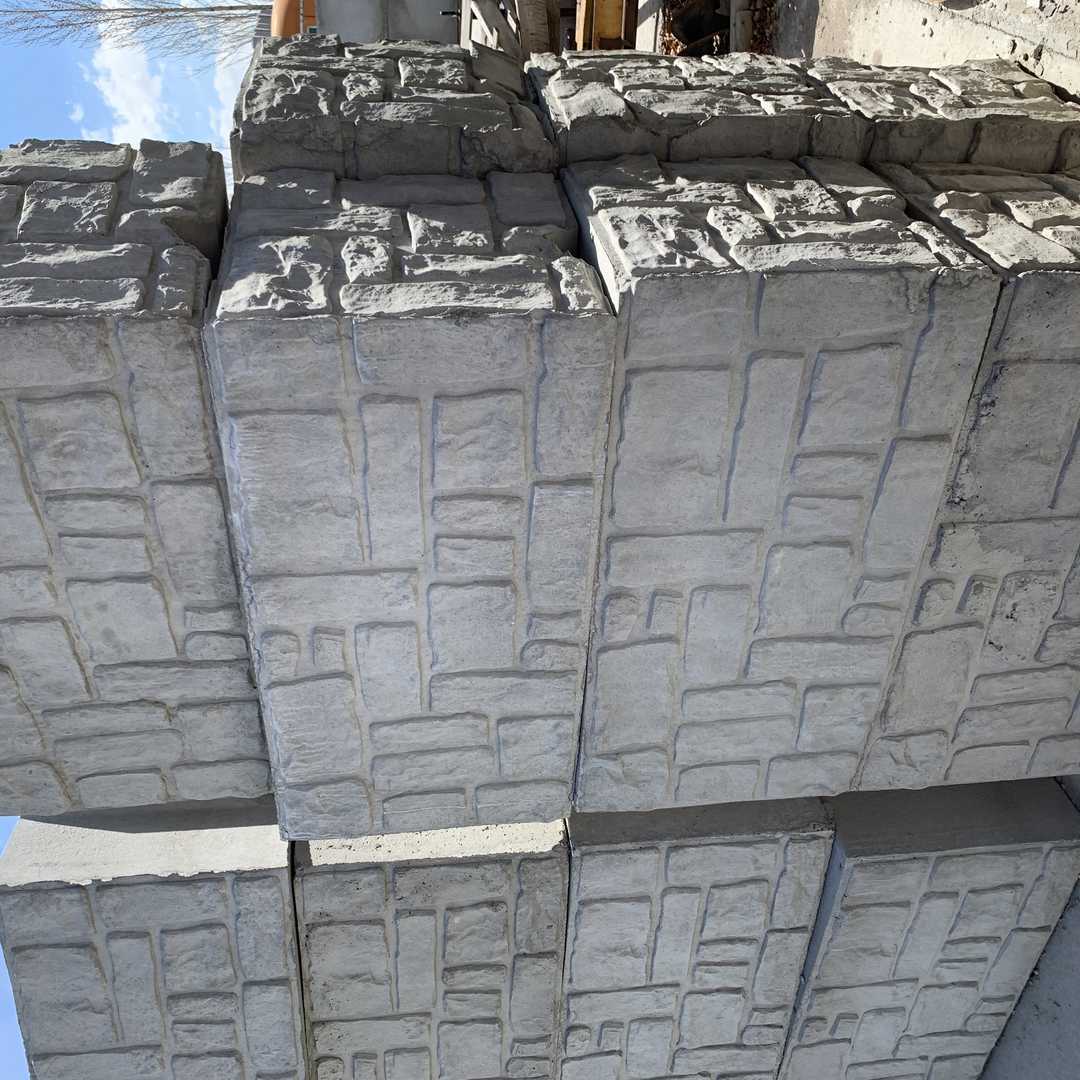
Knoxville yards are rarely flat. Between the ridges, the creek-bottom lots, and the red clay that shows up two shovelfuls down just about everywhere in East Tennessee, a lot of homeowners end up needing a retaining wall — not as a decoration, but as the thing standing between their yard and the neighbor's downhill.
A block retaining wall does two jobs at once. It holds back soil that wants to slide, and it turns a slope you can't use into flat ground you can. Done right, a wall built from big concrete blocks will outlast the house it sits next to. Done wrong, it leans, bulges, or falls over within a few seasons — and almost every failed wall fails for the same handful of reasons.
The first is drainage. Water is heavier than most people think. A cubic foot of saturated soil behind a wall can weigh well over a hundred pounds, and when a wall has nowhere for that water to go, the pressure builds until something gives. Every wall we build gets clean gravel backfill behind the blocks and a way for water to escape, because a wall that can't drain is a wall on a countdown.
The second is the base. A retaining wall is only as good as what it sits on. In Knoxville's red clay, that means digging below the soft topsoil and setting the first course of blocks on compacted gravel, level and buried partly underground. Skipping the base — or setting blocks straight on dirt — is the fastest route to a wall that settles unevenly and starts to stair-step within a year.
The third is the block itself. The walls we build use eco blocks — big concrete blocks roughly two feet by two feet by four feet, set with heavy equipment. A wall made of a few dozen massive blocks behaves very differently from one made of thousands of small pavers: fewer joints, more mass per block, and a face that stands up to years of weather without shifting. For taller walls, we add geogrid — layers of engineered mesh that extend back into the hillside and tie the whole structure into the earth behind it.
Height matters for planning. Short garden walls are one thing, but once a wall climbs past a few feet, the engineering gets serious: more base, more drainage, geogrid layers, and in some cases a permit from the county. If your slope needs more height than a single wall should handle, terraced walls — two or three shorter walls stepped up the hill — are often the better answer. They look better, they're easier to build right, and each wall carries less load.
So when should you call someone? If your yard slopes enough that you're losing soil after every hard rain, if a hillside is creeping toward your driveway or foundation, or if you've got a drop-off you simply can't use — that's wall territory. Also call before you build anything near it: we've seen plenty of fences, sheds, and patios placed right where a wall needed to go.
Every property is different, which is why we don't quote walls off a price sheet. The wall calculator on our site gives you a block count from your wall's length and height, and from there we give you a free estimate based on your actual yard — the access, the soil, the drainage, all of it. No pressure, no obligation.
If you've got a slope to solve in Knoxville or anywhere across East Tennessee, start with the calculator and send us your details. We'll tell you straight what your yard needs.
One last thing worth knowing: the face of the wall is the part you live with. Eco blocks come in different finishes, from rough and natural-looking to smooth and modern, and a cap course along the top gives the wall a finished edge you can sit on. Pick the look that fits your house — the structure behind it is what does the work.
Want to know what your wall takes? Run the wall calculator for a block count, then send your details for a free estimate — no pressure, no obligation.