Retaining Wall Maintenance in East Tennessee: A Seasonal Checklist for Knoxville Homeowners
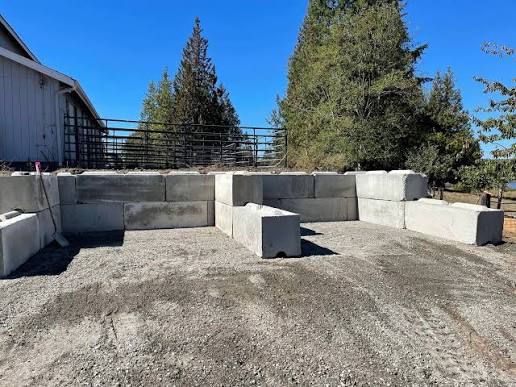
A retaining wall is a low-maintenance structure, not a no-maintenance one. In East Tennessee, our walls take a beating from freeze-thaw winters, spring downpours, and heavy red clay that swells every time it gets wet. The good news is that almost everything a wall needs to stay straight and solid is stuff a homeowner can spot in a single walk around the yard. Here is how retaining wall maintenance works for Knoxville-area homes, season by season.
Start with the big idea: most walls do not fail because the blocks are bad. They fail because water won. Water pressure builds up behind a wall, freezes and thaws in the winter, and slowly pushes things out of line. So nearly every maintenance task on this list is really about one thing: giving water a way out and keeping everything draining the way it was designed to.
Spring is your most important check. March and April bring our heaviest rains, and they reveal drainage problems fast. Walk the full length of your wall after a hard rain and look at the base. You should see water draining out of the weep holes or the outlet of the drain pipe, not pooling against the wall face. If a weep hole looks clogged with dirt, leaves, or mud, clear it by hand or with a stick. If water is sitting behind the wall or seeping out through the joints, the gravel backfill and drain system are struggling, and that is worth a professional look before the next storm.
While you are back there, check the ground above the wall. The soil right behind the cap stones should slope gently away from the wall, not toward it. Over a winter or two, this grade can settle and start funneling water back at the wall instead of away from it. A rake and a little fresh topsoil can fix a mild dip. If a dip has opened up into a gap between the soil and the back of the wall, that gap will fill with water every time it rains, so fill it.
Summer is the season for the face of the wall. East Tennessee grows things aggressively, and anything growing on or against a wall deserves attention. Pull weeds, grass, and small saplings growing between blocks or along the base — roots pry joints open over time, and the bigger the plant gets, the worse the damage. English ivy and kudzu are the worst offenders in our area. Check that downspouts from the house or garage are not dumping onto the wall or the slope above it. One misplaced downspout can saturate a wall faster than anything else.
Summer is also a good time to look at the cap stones. Eco block walls have a top cap finish, and those caps keep water from pouring straight down through the blocks. If a cap has shifted or cracked, get it reset before fall. A missing cap is an open funnel into the inside of your wall.
Fall maintenance is about getting ahead of winter. Clear leaves and debris off the top of the wall and out of any swales or ditches above it. A ditch full of leaves in November becomes a dam in January, and a dammed ditch sends all its water straight at your wall. Trim back any bushes or trees whose roots or branches are pressing against the blocks. Then take one slow walk along the whole wall and look down its length from one end. You are checking for lean — any section that has tipped forward even slightly since spring.
Winter is the watch season, not the work season. Freeze-thaw cycles are hard on every wall in East Tennessee. If you spot frost heaving — soil pushing up behind the wall, or a section of wall that looks different in January than it did in November — make a note of it and check that spot again when the ground thaws in March. Do not try to reset anything in frozen ground.
Now, the most important part of retaining wall maintenance: knowing when to stop watching and call someone. Three signs mean the wall needs professional attention, not just a homeowner walk-around. First, the wall is leaning or bulging noticeably — once a wall moves past a small lean, it does not straighten itself out. Second, blocks have shifted or settled enough to leave a gap you can fit your hand into. Third, the drainage system is not working even after you cleared the weep holes — standing water behind a wall is a problem that gets worse, not better.
None of this is complicated, and a wall that is inspected twice a year and kept draining will easily serve a family for decades. The walls we build from big eco blocks — two-by-two-by-four-foot concrete blocks in plain, brown, or top cap finishes — are heavy and forgiving, which is why they handle our red clay and wet springs so well.
If your wall is showing any of the warning signs above, or you just want a trained eye on it before winter, try our wall calculator to figure out how many blocks your project involves, then call us at (423) 358-2317 for a free estimate. We build eco block retaining walls all over the Knoxville area, and we would rather catch a small problem now than a big one later.
Want to know what your wall takes? Run the wall calculator for a block count, then send your details for a free estimate — no pressure, no obligation.