Retaining Wall Lighting: Low-Voltage Lights That Make a Wall Glow
A retaining wall works all day, but most homeowners enjoy their yard in the evening, and that is when a plain wall can go dark and flat. Low-voltage lighting changes that completely. A few well-placed fixtures make the wall glow instead of loom, mark the edges of steps and patios for safety, and turn the biggest structure in your yard into the backdrop of your evenings instead of a shadow at the end of them.
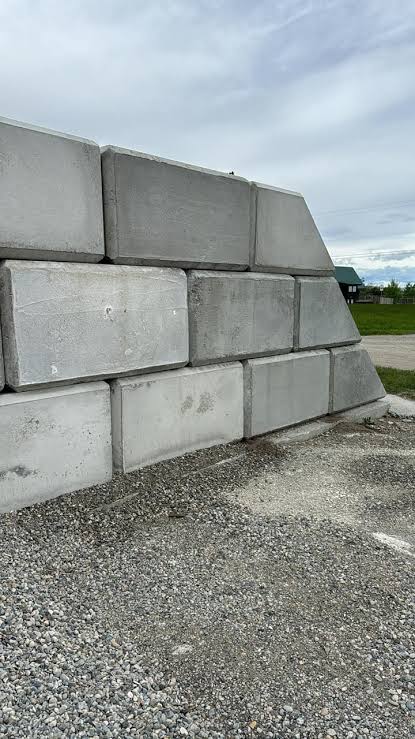
The most popular approach hides the light source. Small fixtures mount under the top cap of the wall, washing light down the face of the blocks. That downward wash shows off the texture of the plain or brown finish, creates a soft pool of light along the base, and keeps glare out of your eyes because you never see the bulb itself. If you are planning a cap finish on an eco block wall, mention lighting early, because cap overhang and fixture placement are natural partners.
Uplighting is the other classic move. Fixtures set in the ground at the base of the wall aim up, raking across the block joints and making the wall feel tall and architectural. It is a bolder look, better for a feature wall near a patio or entrance than for a long utility wall. Raking light is honest, too: it will show every texture and joint, which is a compliment to straight work and a spotlight on crooked work, so it pairs best with a wall built true in the first place.
Safety lighting is less glamorous and arguably more valuable. Steps cut beside a wall, a gate at the top of a grade change, the corner where the driveway meets the wall: these are the places guests stumble. A modest fixture at each hazard, on the same low-voltage system, prevents the twisted ankle that ruins a cookout. In Knoxville's hilly neighborhoods, where nearly every yard has a level change somewhere, lighting the level changes is simply good hosting.
Low-voltage systems are friendly to install and to own. They run on a transformer plugged into an ordinary outlet, the cable can be buried shallow, and the fixtures sip electricity, especially modern LED units. A timer or a dusk sensor means the system runs itself. Planning the cable runs during wall construction is far easier than trenching across a finished yard later, so even if the fixtures themselves are a next-year purchase, laying conduit or cable while the wall is open is a cheap favor to your future self.
Restraint is the design skill here. A wall lit every few feet with even, warm light looks expensive and calm. The same wall with fixtures crowded together, mixed color temperatures, or lights aimed into seating areas looks like a runway. Choose one warm tone, space fixtures for overlapping pools of light rather than hard spots, and light the wall and the walking surfaces, not the night sky. Fireflies still own East Tennessee evenings. Your lighting just needs to borrow a little of the dark, not defeat it.
Stand in your yard at dusk before deciding anything and imagine the wall washed in soft light, the steps edged, the patio corner defined. Then work backward to the fixtures that produce that picture. Lighting sells the wall twice: once as the structure that fixed your slope, and again every single evening as the best-looking thing in the yard.
If you are planning a wall, try the wall calculator on the site to size up your project, or call (423) 358-2317 for a free estimate. We build eco block retaining walls across East Tennessee, and we are glad to walk a lot with you and talk through drainage, layout, and finish before any work starts.
Want to know what your wall takes? Run the wall calculator for a block count, then send your details for a free estimate — no pressure, no obligation.