Retaining Wall for a Sloped Yard in Knoxville: What to Know Before You Build
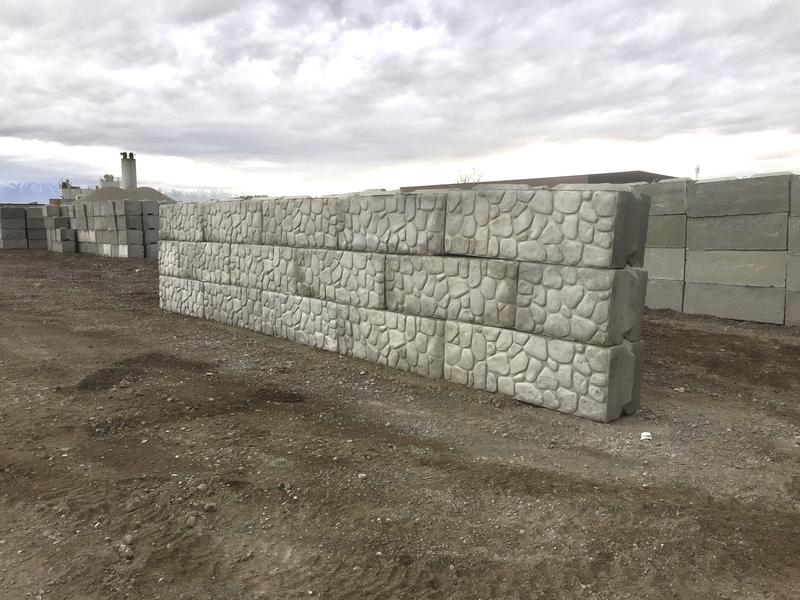
If your yard slopes more than it sits, you're not alone — much of East Tennessee is hills, hollers, and red clay banks. A sloped yard in Knoxville can be a mowing headache, a mudslide risk, or just a patch of ground you can't use. A retaining wall fixes all three, and the big eco blocks we build with are made for exactly this kind of terrain.
THE SLOPE TELLS YOU HOW MUCH WALL YOU NEED
Walk your slope and eyeball the drop. A gentle grade — two to four feet of fall across the yard — usually needs one wall of modest height. A steep bank of six feet or more may call for a taller wall or a series of terraced walls with steps between them. Terracing has a bonus: each level becomes a flat, usable strip of yard for a garden bed, a patio, or just room for the kids to run without rolling downhill.
A good rule of thumb for East Tennessee lots: if the slope is eating your yard, the wall's job is to give that slope a place to rest instead of fighting it.
EAST TENNESSEE CLAY CHANGES THE EQUATION
Our red clay is heavy when wet, and it holds water like a bowl. On a sloped yard that means two problems: the soil pushes harder against the wall during the rainy season, and water wants to pool behind it. That's why the base and the backfill matter more than the block you pick.
We set every wall on a compacted gravel footing — never directly on clay — and we backfill behind the wall with clean stone, not the excavated clay. The stone lets water drop down to a drain instead of saturating the soil against the wall. On steeper slopes we may also add geogrid — mesh layers running back into the bank that tie the wall into the hill itself. When you read a contractor's proposal for a sloped yard and there's no mention of a gravel footing, drainage stone, or geogrid, that's a red flag.
WHY BIG BLOCKS FIT SLOPED YARDS
On a slope, the wall is doing real work — holding a hillside, not a garden border. Our eco blocks are roughly 2x2x4 feet of solid concrete, each one weighing thousands of pounds. Each course steps back slightly from the one below it, so the wall naturally leans into the bank. Stack them three or four high and you have a serious structure that holds a slope with no mortar and no dozens of tiny hand-set pieces that can shift over time.
Three finishes are available — plain concrete, a brown tone that blends with Tennessee soil and wood, and a top cap that gives the wall a finished edge. On a terraced slope, the top cap course makes each level read like a finished garden bed instead of a raw construction wall.
WHAT A SLOPE PROJECT ACTUALLY INVOLVES
Most sloped-yard jobs follow the same arc. First, a free site visit to walk the slope, measure the drop, and look at how water moves through the yard. Then a design that sets the wall height, the drainage plan, and whether terracing makes sense. The build starts with excavation into the bank, a compacted gravel footing, then block courses going up one at a time with stone backfill and drain lines placed behind each course. Finally, the disturbed ground around the wall gets graded and finished so water flows away from the structure.
Most residential sloped-yard walls go up in days, not weeks — there's no mortar to cure and no tiny pieces to hand-set.
WHAT TO ASK YOUR CONTRACTOR
Before anyone digs into your slope, ask four questions. One: what does the footing sit on — compacted stone or my native clay? Two: what drainage is planned behind the wall, and where does the water exit? Three: does this slope need geogrid reinforcement at this height? Four: who handles grading and finish work after the wall is up?
A contractor who answers those four clearly has done this before on Knoxville slopes. A contractor who waves them off hasn't.
TURNING THE SLOPE INTO YARD
The end goal isn't really a wall — it's a yard you can use. Terraced levels become planters, seating areas, or just flat lawn. The top of the wall becomes a sight line instead of a drop-off. And a slope that used to shed water onto your driveway or patio now sits still, held by thousands of pounds of concrete per block.
GET STARTED
If you're in Knoxville or East Tennessee and your sloped yard is winning the argument, plug your wall into our free wall calculator to get a block count, then call us at (423) 358-2317 for a free estimate. We'll walk the slope with you and tell you straight what it needs.
Want to know what your wall takes? Run the wall calculator for a block count, then send your details for a free estimate — no pressure, no obligation.