Railroad Tie Walls: When the Old Wall Has to Go
Drive through any older neighborhood around Knoxville and you will see railroad tie retaining walls that were built when the houses were new. For a while, they did their job and looked the part. The problem is that a tie wall in East Tennessee is a wooden structure buried against damp clay, and wood and damp soil have a predictable ending. If your tie wall is soft, shifting, or shedding pieces, it is not being lazy. It is reaching the end of what the material can do, and it is worth understanding what happens next.
Rot is the main failure, and it starts where you cannot see it. The back and bottom of a tie wall sit in constant contact with moist soil, so decay begins on the soil side and works inward while the front face can still look respectable. You can test ties with a screwdriver or a firm kick at the base. Sound wood resists. Rotten wood feels spongy, crumbles, or lets a tool sink in with little effort. Hollow sounds, fungal growth, and ties that flex when you lean on the wall all tell the same story. Once several ties in the lower courses have gone soft, the wall is being held up mostly by habit.
Insects and fasteners pile on. Old ties attract carpenter ants and other boring insects that speed the hollowing along, and the spikes and rods that tie the courses together corrode in the same damp environment. As connections weaken, individual ties start to bow out, twist, or slide, especially after saturated winter weeks when the soil behind the wall is at its heaviest. Deadmen anchors buried behind the wall, which are supposed to hold the face back, rot at the same rate as the wall itself, so the whole system tends to weaken together rather than one piece at a time.
Knowing when patching makes sense helps you spend wisely. Replacing a single damaged tie near the top of an otherwise sound wall, regrading soil that has piled too high, or fixing a drainage problem that is soaking the wall can buy real time. But when the lower courses are soft in multiple places, the wall is leaning or bulging along its run, or ties are separating at the corners, you are no longer maintaining a wall. You are propping one up. At that point, money spent on patches usually just delays a replacement that the next wet season may schedule for you, suddenly and at the worst angle.
Replacement is also a removal job, and it deserves planning. Old ties are heavy, awkward, and full of splinters and protruding metal, and they need to be disposed of properly rather than burned or buried on site, since the preservatives in them are not something you want in a garden or a fire. The soil behind a failed tie wall is often saturated and slumped, so the replacement wall needs fresh excavation to firm ground, a proper buried base course, and drainage installed behind the new wall from the start, not the hope that the old wall location will behave better this time.
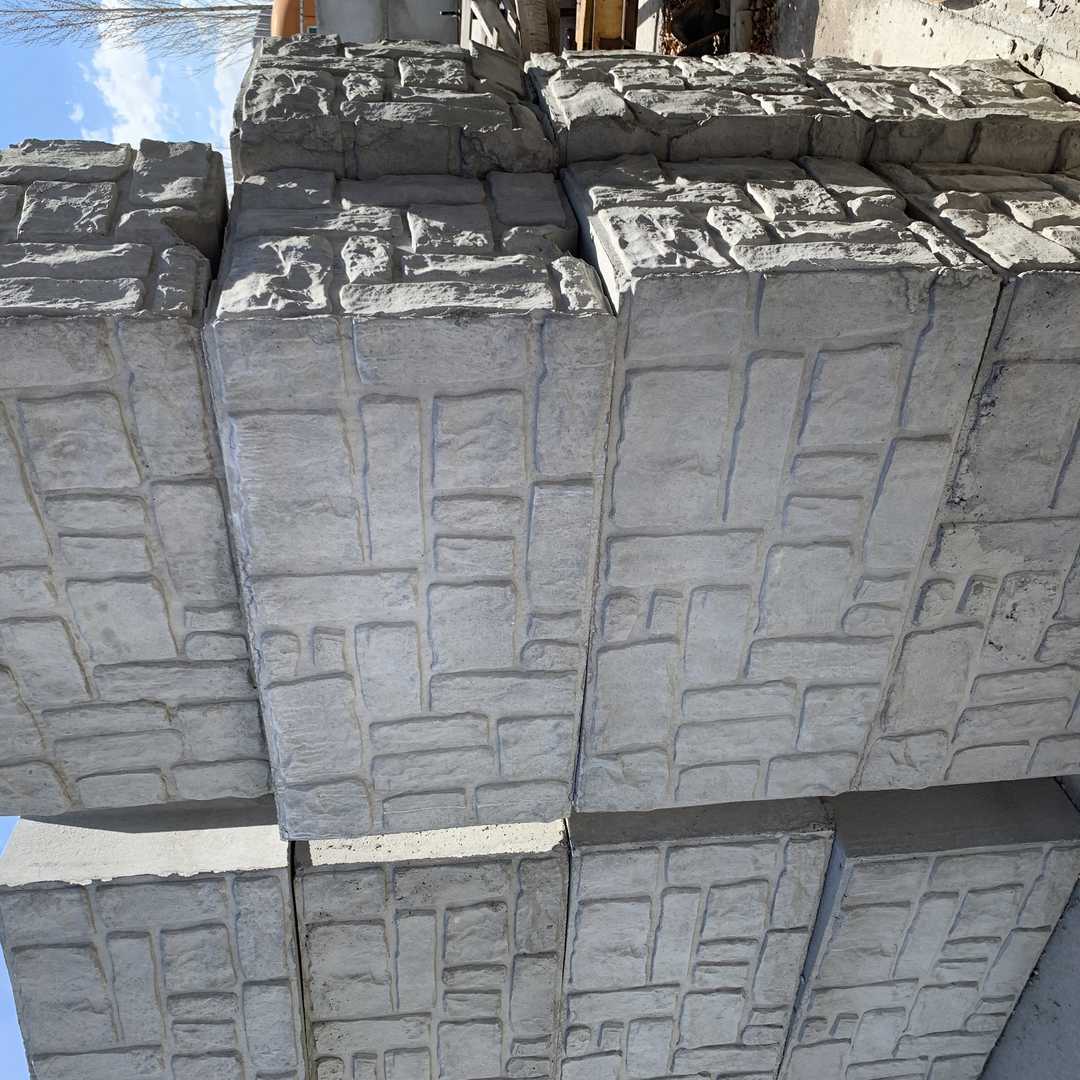
A large concrete eco block wall is the replacement most of these projects land on, for a simple reason. Concrete does not rot in clay. Each eco block is roughly two feet tall, two feet deep, and four feet long, so the new wall has the mass a saturated hillside demands, and it can be finished in plain or brown with a top cap for a clean edge. Homeowners also gain a chance to fix layout problems the tie wall never solved, like adding steps between levels or correcting a line that was never quite where the yard needed it.
If your tie wall is soft at the base, leaning, or losing ties, take photos, note where it feels weakest, and avoid stacking heavy loads at the top edge until it is assessed. For a replacement plan, try the wall calculator on easttnretainingwalls.com for a starting estimate, or call (423) 358-2317 for a free estimate. We will look at what is left of the old wall honestly, explain whether any of it is worth saving, and build the replacement on a base and drainage system designed to outlast the problem that brought us there.
Want to know what your wall takes? Run the wall calculator for a block count, then send your details for a free estimate — no pressure, no obligation.