How Long Does a Wall Build Take? A Realistic Timeline
Ask how long a retaining wall takes and you will get a suspiciously confident answer from somebody. The honest answer is a range with reasons, because wall building has a rhythm that depends on the ground, the weather, the access, and the length and height of the wall itself. What we can do is walk the timeline phase by phase, the way a real East Tennessee job unfolds, so you can recognize a realistic schedule when you hear one and spot a fantasy when you hear that too.
Before any digging, there is the planning stretch: walking the lot, measuring, checking drainage paths, locating utilities through the proper call-before-you-dig channels, and agreeing on layout, finish, plain or brown, cap or no cap, and where material will be staged. This phase takes days, not weeks, but skipping it does not save time. It moves the questions to the middle of construction, where every answer costs more and the machine is already sitting in your yard waiting on it.
Excavation and base work are the slow, unglamorous heart of the schedule. The trench or bench for the wall is dug, soft or unsuitable soil comes out, and the base is built and compacted to give the first course a firm, level home. On a short, straightforward wall this may be a day. On a long wall, a steep lot, or ground that hides surprises, old fill, buried debris, rock, it can be several. This phase decides how the wall performs for decades, so a schedule that rushes it is borrowing time from your wall's future.
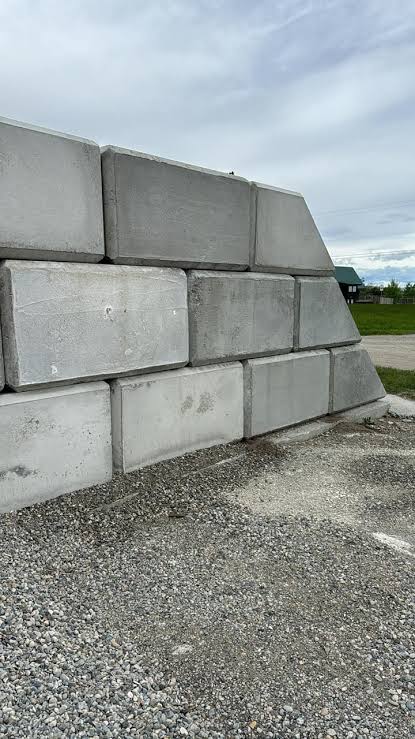
Setting blocks, by contrast, is the fast and satisfying part. Eco blocks are big, roughly two feet tall, two deep, and four long, so a wall rises in visible strides once the base is right. A crew can transform a site in a day or two of setting, stepping courses with the grade, checking line and level as they go. This is the phase homeowners photograph, and it creates the impression that walls go up in no time. Remember that the speed here was purchased by the slow work underneath it.
Backfill, drainage, and finishing run alongside and after the setting: drainage stone and pipe behind the wall, backfill placed and compacted in layers, caps set, the ground above and below graded to shed water correctly, and the site cleaned up. Allow real time for this tail of the job. A wall that is set but not yet drained, backfilled, and graded is not finished, and the difference between a builder's last day and a truly finished job often lives in exactly these steps.
Weather writes its own line in every East Tennessee schedule. A week of rain can pause excavation, make a clay site unworkable, and push everything by days, and winter cold snaps can do the same in the other season. A realistic timeline names the working days the job needs and then admits the calendar days may stretch around the weather. What you want from a builder is not a promise that weather will not happen, but a sequence that keeps your site safe and drained whenever it does.
For most single residential walls, think in terms of several working days to a couple of weeks from digging to done, with longer, taller, or terraced projects taking proportionally more. Your specific number comes from your lot, so use the calculator to frame the size of your project, then get a schedule conversation that talks about phases and weather honestly. A builder who can explain where the days go is a builder whose timeline you can plan your life around.
If you are planning a wall, try the wall calculator on the site to size up your project, or call (423) 358-2317 for a free estimate. We build eco block retaining walls across East Tennessee, and we are glad to walk a lot with you and talk through drainage, layout, and finish before any work starts.
Want to know what your wall takes? Run the wall calculator for a block count, then send your details for a free estimate — no pressure, no obligation.