How Long Do Retaining Walls Last? Lifespan in East Tennessee
If you're thinking about building a retaining wall in East Tennessee, one of the first questions worth asking is a simple one: how long will it actually last? Nobody wants to pay for a wall twice. The honest answer is that a retaining wall's lifespan depends almost entirely on the material, the drainage behind it, and how it was built — not on luck.
Let's start with materials. Small segmented concrete blocks — the interlocking kind you see at home improvement stores — typically last 20 to 50 years in East Tennessee conditions. That's a wide range because it depends on whether the builder used a proper gravel base, geotextile fabric, and a drain pipe behind the wall. Without drainage, even a good block wall can start leaning or bowing within a decade.
Pressure-treated timber walls are the short-lived option. In our wet Tennessee climate, a timber wall usually gives you 10 to 20 years before rot and termites catch up with it. They look fine at first, but wood in constant contact with damp soil is on a timer. Some homeowners go this route for a low garden wall and accept it as temporary — that's a reasonable choice if you know what you're getting.
Natural stone and dry-stacked rock walls can last 50 to 100 years or more. There's a reason you still see dry-stacked stone walls on old East Tennessee farmsteads. But stone is slow, skilled labor, and it needs careful construction to stay standing through freeze-thaw cycles and heavy rain.
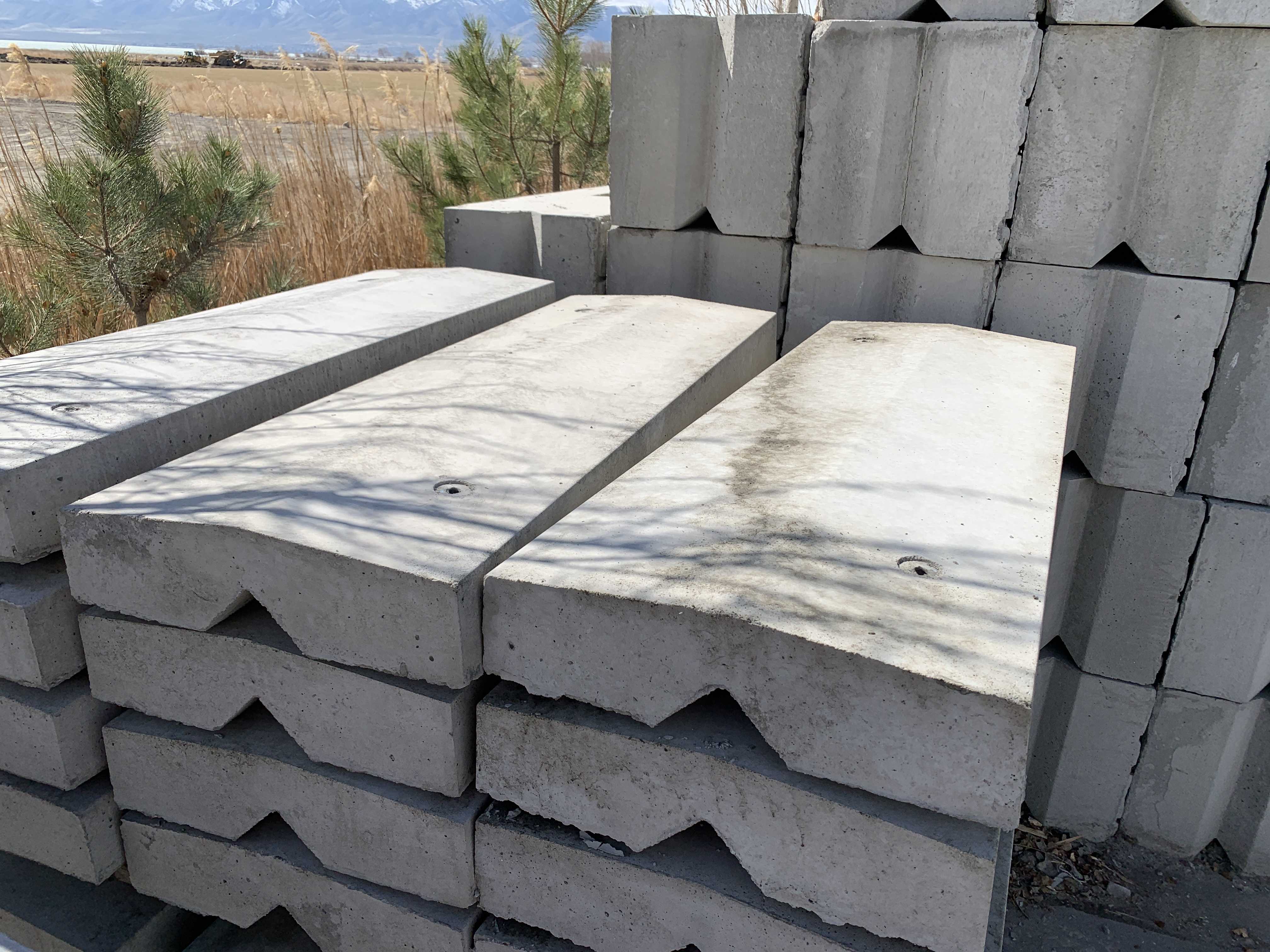
So where do large eco blocks fit in? These big concrete blocks — roughly two by two by four feet each — are built to last 50 years or longer. There's a simple reason: mass. Each block is so heavy that gravity alone does most of the work, and there are far fewer joints where water can get in compared to small-block walls. Less movement, fewer weak points, longer life. When properly set on a compacted gravel base with drainage behind them, eco block walls are among the longest-lasting options you can put in a residential yard.
But here's the part most homeowners miss: the material is only half the story. Drainage is the other half. Our red clay soil holds water like a bathtub, and a saturated hillside pushes against a wall with thousands of pounds of hydrostatic pressure. That's why walls fail — not because the blocks wore out, but because trapped water pushed them over. A wall with a drain pipe, gravel backfill, and weep holes outlives an identical wall without them by decades. If you take one thing from this post, it's that: ask your contractor about drainage before you ask about anything else.
The base matters just as much. A retaining wall is only as good as what it sits on. That means compacted crushed stone, set below the frost line and below grade, so the wall can't shift when the ground freezes and thaws. In East Tennessee we don't get the deep frost of the northern states, but the ground still moves — and a wall on a shallow or uncompacted base will settle, lean, and eventually fail long before its material lifespan runs out.
Maintenance plays a role too, and it's mostly free. Once a year, walk the length of your wall and look for early warning signs: leaning, bulging, cracks in the cap, water pooling at the base, or soil washing out from behind it. Catching a drainage problem early is cheap. Ignoring it until the wall visibly leans is not. Keep gutters and downspouts from dumping roof water directly behind the wall, and keep tree roots at a respectful distance — both are common causes of premature wall trouble.
One more thing worth knowing: the area around a new wall needs attention too. Construction disturbs the soil above and below the wall, and bare disturbed soil in East Tennessee can wash out fast in a heavy storm. Once the wall is in, the bare soil around it needs cover fast — Knoxville hydroseeding can spray grass seed over the disturbed ground in a day, locking the soil in place so the fresh grading doesn't wash back into the wall's drainage zone.
To put it all together: a timber wall might give you 15 years, a small-block wall 20 to 50 depending on drainage, a natural stone wall generations, and an eco block wall 50-plus years with minimal upkeep. The spread between the low end and the high end is almost always about the build quality, not the brochure.
When you're comparing options, ask three questions: what's the base, what's the drainage plan, and what finish is available. For eco block walls, you'll typically see three finish choices — plain, brown, and a top cap that gives the wall a clean, finished edge. A good contractor will walk the property, look at the soil and the slope, and tell you honestly what the wall needs to last.
Want to know what your yard needs? Try our free wall calculator to get a rough block count for your project, then call (423) 358-2317 for a free estimate. We'll take a look at your slope, your soil, and your drainage, and build you a wall that's meant to outlast us all.
Want to know what your wall takes? Run the wall calculator for a block count, then send your details for a free estimate — no pressure, no obligation.