Geogrid Retaining Walls in East Tennessee: What It Does and When You Need It
If you have been pricing retaining walls in East Tennessee, you may have heard the word geogrid come up in conversations about taller walls. It sounds technical, but the idea behind it is simple — and in our red clay and rocky hillsides, it is often the difference between a wall that stands for decades and one that starts leaning after a few wet seasons.
Geogrid is a flat, flexible sheet of strong synthetic mesh. It gets unrolled in layers behind a retaining wall as the wall goes up, with each layer buried in compacted soil extending back into the hillside. Think of it like sandwiching the soil in reinforcement layers. The blocks form the face of the wall, but the geogrid turns the soil behind it into one reinforced mass that holds itself up instead of pressing against the wall.
Without geogrid, a tall wall has to fight the full weight of the soil behind it on its own. With geogrid, that soil becomes part of the structure. That is why engineers call these mechanically stabilized earth walls — the earth itself is doing part of the work.
So when does a wall actually need it? The honest answer is that it depends on height, soil, and what is sitting above the wall. Short garden-height walls in good soil usually do not need reinforcement. But once a wall gets into the four-to-five-foot range and beyond — especially on an East Tennessee hillside where clay holds water and gets heavy — geogrid starts becoming a serious consideration. It also matters what is on top: a wall holding back a slope is one thing, but a wall below a driveway, a parking pad, or the corner of a house is carrying extra load, and reinforcement becomes that much more important.
This is where many smaller walls fail. A homeowner builds a four-foot wall from small blocks with no reinforcement, the soil behind it saturates after a couple of big spring storms, the clay pushes, and the wall starts to bow. We see leaning walls like this all over East Tennessee. In most cases, the blocks were not the problem — the missing piece was reinforcement in the soil behind them.
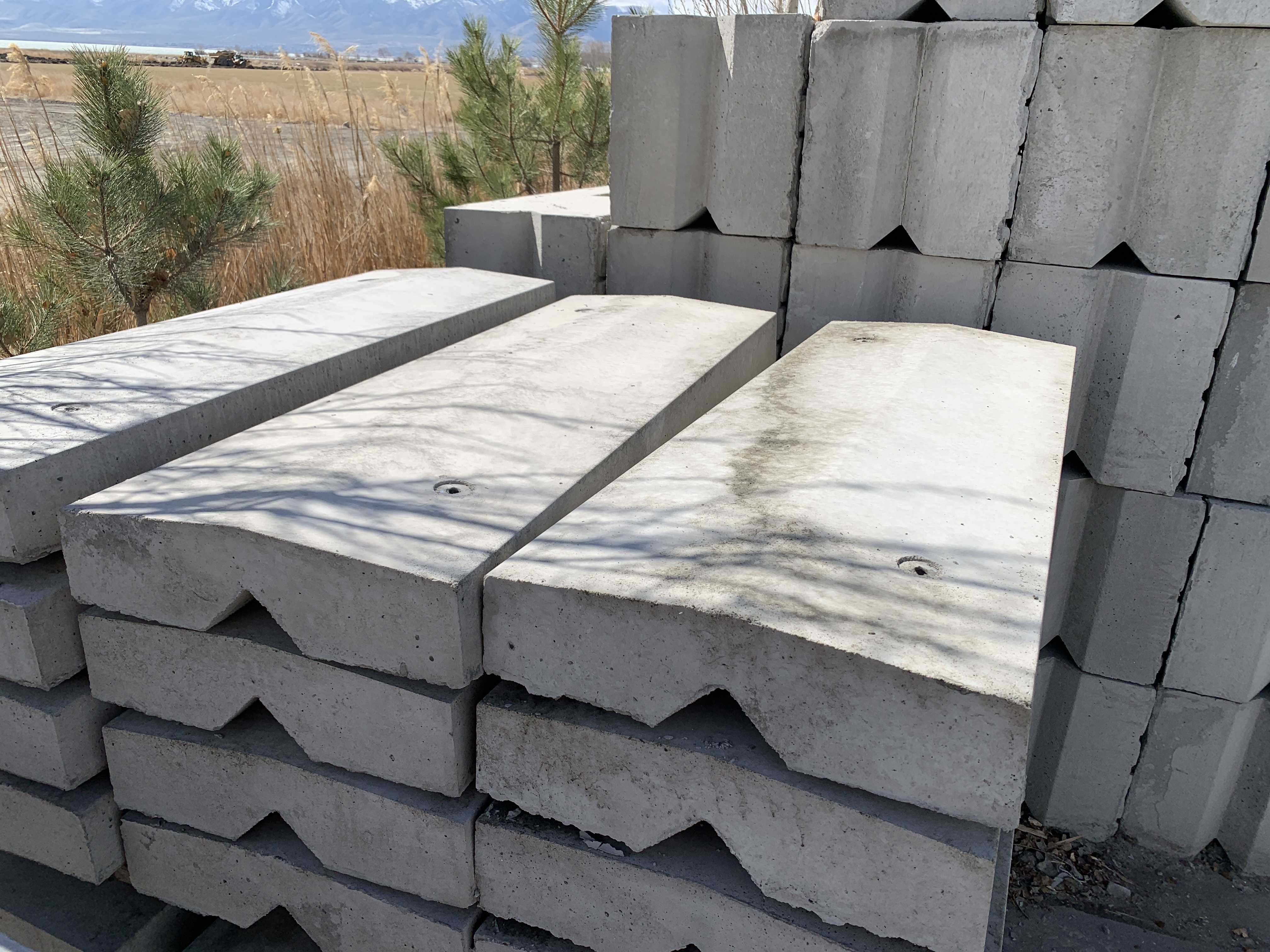
The blocks matter too, and this is where eco blocks have a real advantage. Big two-by-two-by-four-foot concrete blocks are far heavier per block than anything you stack by hand, and their weight plus the geogrid behind them makes a seriously stable structure. The geogrid layers extend back into compacted backfill behind the blocks, so you get a reinforced soil mass faced with massive blocks. It is a combination that handles East Tennessee's wet clay far better than small-block walls ever could.
One thing to understand: geogrid is a one-time opportunity. Once a wall is built, you cannot add reinforcement behind it without taking the wall apart. That is why the design decision has to happen before construction, not after. A good builder evaluates the height, the soil, and the slope above your yard and tells you straight whether the wall needs geogrid — and if it does, that gets planned into the build from day one.
A few practical things worth knowing. First, geogrid layers have to be placed at the right spacing and buried deep enough into the hillside to actually do their job — it is not a matter of tossing a sheet of mesh behind the blocks. Second, the backfill around the geogrid matters: clean compacted material lets water drain instead of soaking the reinforced zone. Drainage and geogrid work as a team — reinforcement handles the weight, drainage handles the water. Third, finishing matters: eco blocks come in plain, brown, and top cap finishes, so a reinforced wall does not have to look industrial. You get the structure and the look.
If you are planning a wall on a slope, near a driveway, or anything much over a few feet tall, it is worth asking about reinforcement before you commit to a design. Every yard is different — the slope, the soil, and what sits above the wall all factor in.
Start with the free wall calculator on our homepage to estimate how many blocks your project needs, then call (423) 358-2317 for a free estimate. We will look at your slope, your soil, and your plans, and give you a straight answer on whether your wall needs geogrid — before a single block goes in.
Want to know what your wall takes? Run the wall calculator for a block count, then send your details for a free estimate — no pressure, no obligation.