French Drains Behind a Retaining Wall: Where the Water Really Goes
Most retaining walls in East Tennessee do not fail because the blocks were weak. They fail because water got trapped behind them. Red clay holds water like a bowl, and after a long Knoxville rain that trapped water gets heavy. It pushes. A French drain behind the wall gives that water an easy way out before pressure ever builds, and that one detail separates a wall that lasts from a wall that leans.
A French drain is simpler than the name sounds. It is a perforated pipe laid in a trench of clean gravel behind the wall, wrapped so soil cannot clog it, and sloped so water runs by gravity to a safe outlet. As groundwater seeps through the backfill, it drops into the gravel, finds the pipe, and travels away from the wall instead of sitting against the back of the blocks soaking the soil heavier by the hour.
Placement matters. The pipe belongs low, near the base of the wall, behind the first course of blocks, not floating halfway up in the backfill. It needs a steady fall toward the outlet, even a gentle one, because water will not run uphill to help you. The outlet itself has to daylight somewhere sensible, downhill and away from the wall, the house foundation, and any place where the discharge would just pond and soak back in.
Gravel choice matters too. Rounded or washed stone around the pipe keeps open spaces for water to move. Fine crusher dust and dirt mixed into that gravel choke the system over time. A good layer of filter fabric between the native soil and the clean stone helps keep East Tennessee clay fines from migrating in and slowly silting the whole drain shut, which is a common reason older drains quit working long before the wall itself wears out.
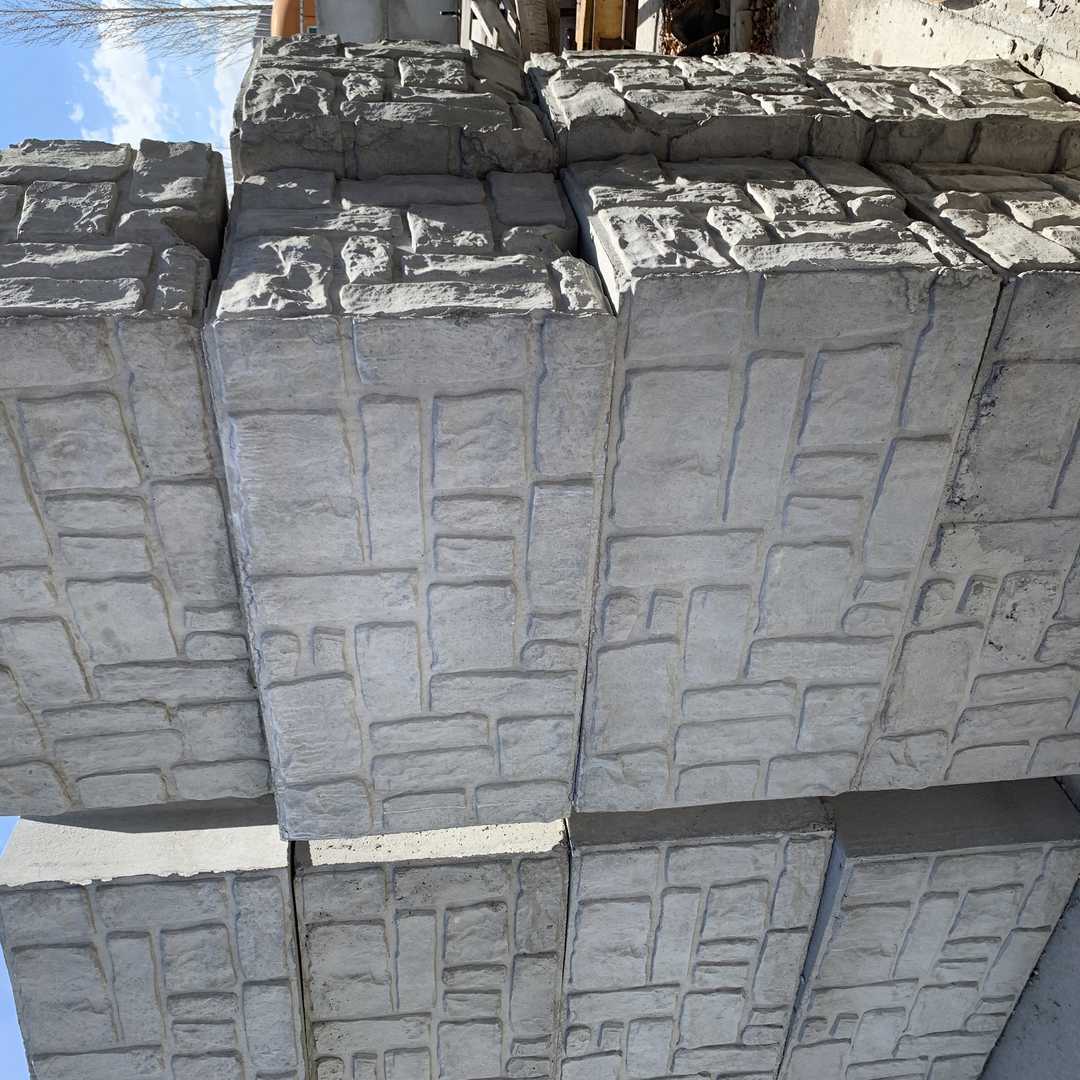
Eco block walls make drainage planning especially important because the blocks are big, roughly two feet tall, two feet deep, and four feet long. That mass handles a lot, but mass alone is not a drainage plan. We think about where water enters behind the wall, where it travels, and where it exits on every single job, whether the wall is holding a driveway edge in Fountain City or a backyard slope out toward Maryville.
Surface water is a separate problem from groundwater, and a French drain only solves one of them. Rain running down a hillside toward your wall should be caught or redirected before it pours over the top and erodes the backfill. Sometimes that means a shallow swale above the wall. Sometimes it means grading the yard so runoff splits around the wall instead of concentrating in one low spot that overwhelms everything below it during a storm.
If you already have a wall, there are signs its drainage is struggling. Look for weeping that lasts for days after rain, muddy water squeezing out in one spot, soil settling right behind the top of the wall, or a white crust and staining low on the face. A wall can often be helped if the problem is caught while the wall is still straight. Once it has leaned far enough, drainage fixes alone may no longer be enough.
When we plan a new wall, the drain is not an add-on we talk you into later. It is part of the wall system from the first sketch, sized and routed for that specific lot, that soil, and that slope. Knoxville lots are rarely flat, rarely uniform, and rarely drain the way the homeowner expects, so the time to solve water is before the first block is set, not after the first big storm tests the work.
If you are planning a wall, try the wall calculator on the site to size up your project, or call (423) 358-2317 for a free estimate. We build eco block retaining walls across East Tennessee, and we are glad to walk a lot with you and talk through drainage, layout, and finish before any work starts.
Want to know what your wall takes? Run the wall calculator for a block count, then send your details for a free estimate — no pressure, no obligation.