Eco Blocks vs. Natural Stone: Looks, Labor, and Longevity
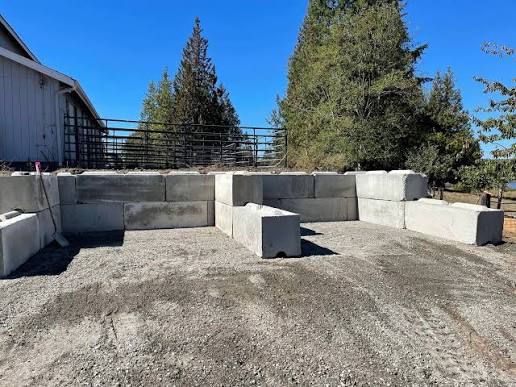
Natural stone is the wall material almost everybody admires. A well-built stone wall looks like it grew out of the hillside, and East Tennessee has plenty of old stone work still standing as proof that the material can last. So the comparison with eco blocks is not about whether stone is good. It is about what stone asks of your project in time, labor, and consistency, and what you get in return compared with a big precast block wall built over a much shorter window.
Start with the build itself. A natural stone wall is assembled stone by stone, with each piece chosen, fitted, and sometimes shaped by hand. That craftsmanship is exactly why people love the result, and it is also why stone walls take a long time and depend heavily on the individual mason. Two crews can produce very different walls from the same pile of stone. Eco blocks arrive uniform, each one roughly two feet by two feet by four feet, so the wall rises in even courses with a predictable line. The skill in a block wall is in the footing, leveling, and drainage rather than in fitting each individual piece.
Longevity is closer than most people expect. Stone itself is nearly indestructible, but a stone wall is only as good as its footing and the way its pieces lock together, and older dry-stacked walls can bulge or shed stones as soil and water work behind them over the decades. An eco block wall relies on sheer mass and consistent contact between courses, and each block is heavy enough that the wall resists shifting as a unit. Both will outlast their builders if the drainage is right, and both will disappoint early if water is trapped behind them. The hidden work decides more than the face material does.
Appearance is a genuine trade-off, so be honest about what you want to look at. Irregular stone has texture and variation that no manufactured product fully copies, and on a historic property or a rustic cabin setting, that may be worth everything to you. Eco blocks offer a cleaner, more regular face, in plain and brown finishes, with a top cap finish for the top course. The brown finish in particular sits comfortably in wooded East Tennessee yards, and the even courses give a tidy line that suits most suburban and country homes built in the last several decades.
Consider the scale of your project as well. Stone makes fine sense for a short garden wall or a small accent where the hand-built character is the whole point. As walls get taller and longer, the labor in stone grows quickly, and scheduling a skilled mason for a big job can take patience. Block walls scale more predictably, because each course covers ground at a steady pace and the material is consistent from the first block to the last. For the long slope behind a house or a driveway cut, that predictability matters to most homeowners.
Maintenance differs a little over the years. A stone wall may need an occasional stone reset if frost and water loosen a piece, which is a small job for a mason and a puzzling one for most homeowners. A block wall generally asks only for the usual checks: keep drainage outlets clear, watch the grade at the top, and deal with any soil settling early. Neither wall should need much if it was built on a solid footing with water handled correctly from the start.
If you love stone and your project is small, follow that instinct. If your slope is long, tall, or simply needs to be handled in a timely, predictable way, eco blocks deserve a serious look. Try the wall calculator on the site to size your project, or call (423) 358-2317 for a free estimate. The best material is the one that fits your yard, your schedule, and the wall you actually need.
Want to know what your wall takes? Run the wall calculator for a block count, then send your details for a free estimate — no pressure, no obligation.