Eco Block Finishes: Plain, Brown, and the Top Cap Look
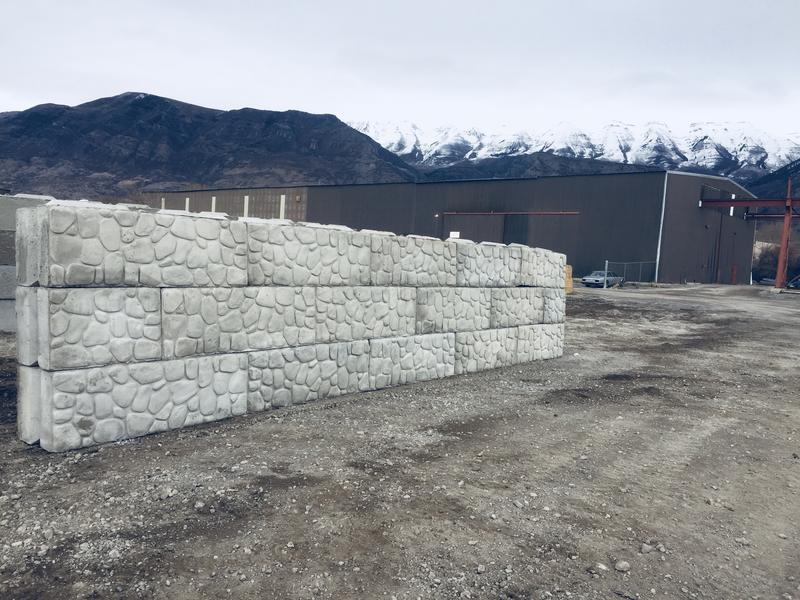
People picture a retaining wall as plain gray concrete, and sometimes that is exactly right. But eco block walls offer a few finish choices, and since a wall is a big, permanent feature you will see every day, it is worth slowing down and choosing on purpose. The options are straightforward: a plain finish, a brown finish, and a cap course along the top that changes the whole character of the finished wall.
The plain finish is honest concrete, light gray, clean, and unfussy. It suits utility walls, farm and shop areas, driveway edges, and modern houses where gray already appears in the roof, stone, or trim. Plain also weathers gracefully in East Tennessee. It shows the natural variation of concrete, and over time it settles into the landscape the way a concrete drive or a stone outcropping does, present but not demanding attention from across the yard.
The brown finish warms the wall up considerably. Against East Tennessee's red clay banks, green lawns, and wooded lots, brown reads more like earth and timber than like infrastructure. Homeowners often choose it near houses with brown or bronze trim, stained decks, or natural wood accents, and on lake and country properties where gray would feel stark. Neither finish is stronger than the other. This is a look decision, not a structural one, so choose with your eyes.
The top cap is where a wall goes from built to finished. A cap course runs along the top of the wall, giving it a defined edge, a slight overhang line, and a surface that sheds water neatly instead of letting it run straight down the face. From the street, the cap is often the detail that makes neighbors describe the wall as handsome instead of just big. It also gives you a clean top line even when the ground behind the wall rises and falls a little.
Mixing is allowed, within reason. Many projects use the standard finish for the long runs of wall and save the cap for the full length, because a cap that stops and starts looks like a mistake. You can also pair the wall finish with what goes around it: gravel, mulch, plantings, and lighting all shift how a color reads. Brown against dark mulch nearly disappears, while plain concrete beside light gravel can look almost white in summer sun, so think in combinations, not samples.
Remember what these blocks are. Each eco block is roughly two feet tall, two feet deep, and four feet long, so the face of the wall has a bold, large-scale pattern of joints. That scale suits driveways, terraces, and big slopes well, and the finish you choose will be seen in large fields of color, not small patches. If you can, look at a finished wall in person at the height you are planning, in daylight like your own lot gets, before you decide for good.
There is no wrong answer here, only the answer that fits your place. A working farm entrance, a Knoxville backyard terrace, and a lake house slope are three different settings, and the best finish is the one that makes the wall belong to yours. We are glad to talk through photos of your lot and point out which direction we would lean, and why, before anything is ordered or set.
If you are planning a wall, try the wall calculator on the site to size up your project, or call (423) 358-2317 for a free estimate. We build eco block retaining walls across East Tennessee, and we are glad to walk a lot with you and talk through drainage, layout, and finish before any work starts.
Want to know what your wall takes? Run the wall calculator for a block count, then send your details for a free estimate — no pressure, no obligation.