Choosing a Retaining Wall Contractor in East Tennessee: 7 Questions to Ask
Not every retaining wall contractor in East Tennessee builds the same wall — or builds it for the ground we actually have here. Knox County's red clay, the hill country from Sevierville to Morristown, and our regular heavy rains make wall-building in this part of the state its own trade. Picking the right contractor matters more than picking the right block, because most failed walls are failed installs, not failed materials.
Here are the questions worth asking before you hire anyone.
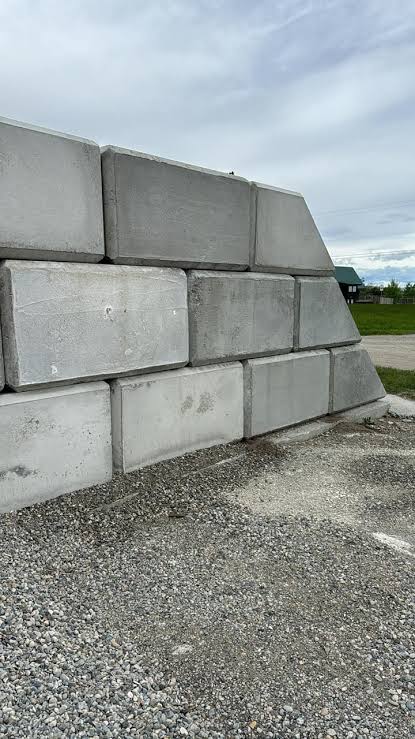
Ask what they build with, and why. In East Tennessee you'll hear about small segmental blocks, poured concrete, railroad ties, and the big eco blocks — massive concrete blocks, roughly two feet by two feet by four feet, stacked like building blocks to form the wall. Each has a place. Small blocks work for low garden walls. Poured concrete handles tight engineered spots. But for a tall hillside wall on clay, a big-block wall with gravel backfill and real drainage is hard to beat, because the blocks have the mass to hold the hill on their own while the drain system moves water out from behind them. If a contractor can only build one type, you'll get that type no matter what your yard needs. A good contractor explains the options and tells you which one fits your slope, your soil, and your budget — and can explain why the others don't.
Ask how they handle drainage. This is the question that separates contractors who have rebuilt other people's walls from contractors who haven't. A retaining wall fails when water pressure builds up behind it, and East Tennessee clay holds water like a bowl. Every wall worth building needs crushed stone backfill and a way for water to escape — a perforated drain pipe, weep holes, or daylight outlets — depending on the design. If the answer is "we'll throw some gravel behind it" or the contractor doesn't bring up drainage until you do, keep looking.
Ask how deep they dig the base. A wall sitting on a shallow trench of loose soil will move when the ground freezes and thaws, and even in East Tennessee winters we get enough freeze-thaw cycles to shift a lazy base. The first course of block should sit on a compacted base of crushed stone, with enough of that first block buried to keep it locked in. Ask for specifics — depth of the base, how it's compacted, how the first course is leveled. A contractor who answers confidently has done it hundreds of times. A contractor who waves it off hasn't thought about it.
Ask for local work you can look at. A retaining wall is one of those things you can judge by driving past it. Ask for two or three walls they've built in the last few years — ideally in East Tennessee, where they've weathered a few of our storm seasons — and go look. Check the top course for tipping, look for cracks or bowing in the face, and look at the ground above the wall for washouts. Walls older than five years that still look straight are the best advertisement a contractor has.
Ask how they handle permits and property lines. Most counties around Knoxville have rules about walls over a certain height, walls near property lines, and walls that affect drainage onto a neighbor's land. Some taller walls need an engineered design. A contractor who works here regularly will know which jurisdictions ask for what, and will tell you up front if your wall needs an engineer's stamp. Be wary of anyone who says permits don't matter — if the wall ever fails and the county finds it was built without one, that's your problem, not theirs.
Ask what happens if the wall fails. Every contractor is confident before the build. Ask specifically: if the wall leans, bows, or shifts within the first few years, who fixes it, and does that cost you anything? Get the answer in writing in the contract. A contractor who stands behind the work will put it in the contract without being asked twice.
Finally, ask how they estimate. A careful contractor measures your slope, figures the wall's height and length, accounts for the soil and the drainage situation, and explains how they got to their number — not with pricing on a postcard, but with a clear scope. The honest ones will tell you that a wall on a gentle slope with good access is a different job than a ten-foot wall on a steep hillside with no equipment access. If the estimate process is a five-minute walk-around and a number, the wall will probably get the same level of thought.
Our take, for what it's worth: the contractor matters more than the material, but both matter. We build eco block walls here in East Tennessee — those big concrete blocks with a choice of plain, brown, or a finished top cap — because for the tall clay hillsides common around Knoxville, mass plus drainage wins. But whether you hire us or someone else, ask the questions above and hire the contractor whose answers show they've thought about your yard, not just your invoice.
Want to get started? Try our wall calculator to estimate how many blocks your project takes, then call (423) 358-2317 for a free estimate. We'll walk your slope, talk through the options, and give you a straight answer about what your wall needs.
Want to know what your wall takes? Run the wall calculator for a block count, then send your details for a free estimate — no pressure, no obligation.