Buying a Home With an Old Wall: An Inspection Checklist for East Tennessee Buyers
In East Tennessee, plenty of good homes come with an older retaining wall, and that wall deserves the same scrutiny you give the roof and the foundation. Walls last a long time when they are built well, and they can also hide years of quiet water trouble behind a face that looks acceptable from the driveway. You do not need to be an engineer to sort a sound wall from a suspect one. You need a slow walk, a few specific things to look for, and the willingness to ask for a professional opinion when the signs add up.
Start with the overall line of the wall. Stand at one end and sight along the face. A healthy wall reads straight and even, course by course. Warning signs are a belly or bulge in the middle, a top that leans outward compared with the base, or individual blocks that have stepped out of line with their neighbors. Small imperfections in a very old wall may have been stable for years, but any visible lean deserves a question, because walls under soil pressure generally move in one direction over time, not back.
Next, look at the joints and the ground for evidence of soil on the move. Soil, sand, or fine gravel washed out at the base or through joints after rain means the material behind the wall is migrating, which points to drainage or soil separation problems inside the build. Check behind the top of the wall for a trench or sunken strip where backfill has settled or washed away, and check the ends of the wall for gullies where runoff has been cutting around them. Each of these is the wall telling you its hidden parts need attention.
Water leaves the clearest evidence, so follow it. Is there a visible drainage outlet, and does the ground below it show that it actually runs? Are there dark seep lines or heavy staining on the face showing where water habitually comes through? Do downspouts from the roof pour behind or near the wall? Does the yard above the wall slope toward it with no swale or diversion? An old wall with good water routes is a much safer bet than a younger wall fighting trapped water every storm, and you can read most of that story from the surface.
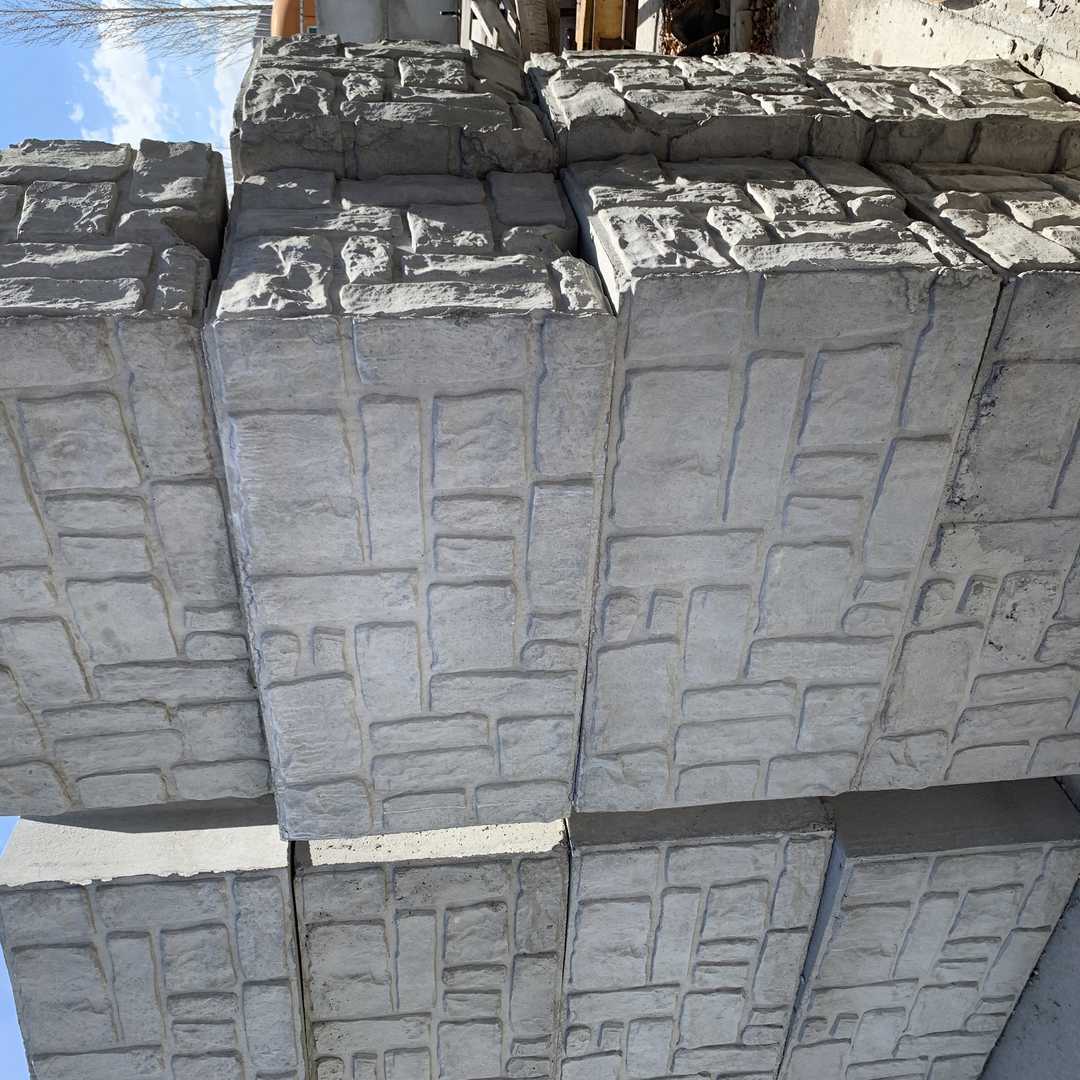
Ask questions and ask for paper. How old is the wall, who built it, and has it ever been repaired or partially rebuilt? Sellers may not know, and that is common with older homes, but whatever is known helps. If the wall is an eco block wall, the big blocks of roughly two feet by two feet by four feet in plain or brown finishes, ask whether it was professionally installed on a proper buried base with drainage, since those two facts predict its future better than its appearance does. Your home inspector can flag wall concerns too, though many inspectors note walls briefly rather than evaluating them in depth.
Weigh what you find in proportion. Cosmetic staining, tired mulch, and a shallow settled spot behind the top are maintenance items, not deal-breakers. Active leaning, soil loss, chronic standing water, or a wall holding back a driveway or structure while showing distress are items for a professional evaluation before you close, so any needed work is understood and negotiated with open eyes. Retaining walls are replaceable and repairable, and knowing the true state of one simply makes you a better-informed buyer.
If you are under contract or newly moved in and want a wall evaluated on its own merits, bring photos and your checklist notes. Try the wall calculator on the site if replacement sizing comes up, or call (423) 358-2317 for a free estimate. An old wall is not a reason to walk away from a home you love. It is a reason to look carefully, ask plainly, and buy with your eyes open.
Want to know what your wall takes? Run the wall calculator for a block count, then send your details for a free estimate — no pressure, no obligation.