Building a Wall in Winter: Cold-Weather Concrete and Frozen Ground
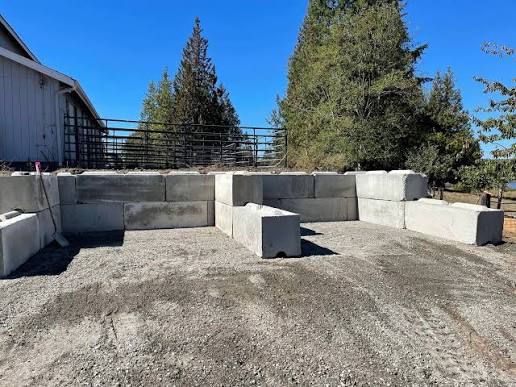
Homeowners often assume wall building shuts down until spring, and in East Tennessee that assumption wastes some perfectly workable weeks. Our winters are cold in spells rather than frozen solid for months, and a retaining wall built around eco blocks has some natural winter advantages. The honest answer is that winter building is very possible, provided the builder respects frozen ground, cold materials, and short days instead of pretending December is just a colder June.
Frozen ground is the first real issue. Soil that is frozen on top may dig like concrete in the morning and turn to soup by afternoon as it thaws, and a base set on ground that later thaws and settles will move with it. The rule is simple: the footing and base of a wall belong on firm ground below the frost-affected layer, never on a crust that will melt out from under the work. On genuinely frozen days, the smart move is to wait a day, and a good schedule builds that flexibility in from the start.
Eco blocks themselves handle winter better than poured-in-place work. The blocks arrive already cured, made in controlled conditions, so there is no wet concrete on site needing warm days to gain strength before it can freeze safely. Each block, roughly two feet tall, two deep, and four long, is set as a finished unit. The concrete work on a typical job is limited to footings or leveling work where needed, and that smaller scope is far easier to protect on cold nights with blankets and timing.
Backfill and compaction need winter judgment too. Frozen clods of clay will not compact, no matter how long the machine runs over them, and burying frozen chunks guarantees settling when they thaw in spring. Clean drainage stone is far more forgiving in cold weather, which is another quiet argument for doing the drainage zone properly. Wet clay in a cold snap can be simply unworkable, and a builder who says so is protecting your wall, not stalling your project.
Daylight and weather windows shape the winter schedule honestly. December days in Knoxville are short, and rain arrives cold and stays longer. A winter job is planned in smaller daily bites, excavation, base, blocks, backfill, sequenced so the site is never left in a vulnerable open state over a wet weekend. Homeowners should expect a winter timeline with a little more weather slack in it, and in exchange they often get scheduling flexibility that the spring rush never offers.
There are genuine advantages to building before spring. Your yard is dormant, so construction traffic hurts less and recovers faster. The wall is finished and drained before the heavy spring rains arrive to test it, instead of being built in the middle of them. And when the first warm weekends come, your project is the one already done, with the terrace, driveway, or garden bed ready to use while everyone else is still waiting for a start date.
If a winter build fits your life, the conversation to have is about ground conditions and sequencing, not about the calendar. Ask how frozen or saturated soil will be handled, what happens on rain days, and how the base will be protected. Straight answers there mean winter is an opportunity. Vague answers mean waiting for spring is the wiser call.
If you are planning a wall, try the wall calculator on the site to size up your project, or call (423) 358-2317 for a free estimate. We build eco block retaining walls across East Tennessee, and we are glad to walk a lot with you and talk through drainage, layout, and finish before any work starts.
Want to know what your wall takes? Run the wall calculator for a block count, then send your details for a free estimate — no pressure, no obligation.