After the Big Rain: A Storm Check for Your Retaining Wall
East Tennessee storms do not ease in. A front stalls over the valley, the creeks rise, and Knoxville yards take on inches of rain in a day or two. That kind of weather is the real test of a retaining wall, and the best time to inspect yours is in the first day or two after the rain stops, while the evidence is still fresh and easy to read.
Start at the top of the wall. Walk the ground right behind it and look for new settling, cracks in the soil running parallel to the wall, or a low spot that was not there before. Settled backfill often means soil washed down into the drainage stone or out through a gap. A shallow dip you catch now can be filled and regraded simply. Left alone, it becomes a pond that feeds more water behind the wall with every storm.
Next, check where the water went. Drain outlets should have run during the storm, and you may see damp ground or a washed path below them. That is good evidence the system moved water. What you do not want is water still seeping from the face of the wall days later, muddy trickles carrying soil with them, or a new wet streak that starts high on the wall instead of low, which can point to surface water getting in from above.
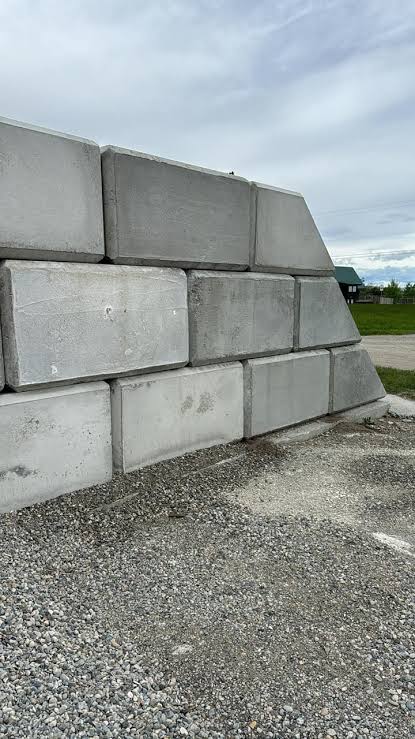
Now stand back and sight down the face of the wall. Look for any change in line: a block that sits proud of its neighbors, a section that bows, or a top course that no longer runs true. Eco blocks are large, roughly two by two by four feet, so movement tends to show as a whole section shifting rather than one small unit crumbling. Compare a phone photo from before the storm if you have one. Small changes are easier to believe when you can see them side by side.
Check the bottom of the wall too. Soil or mulch washed against the base is normal after a hard rain and just needs clearing. What matters more is erosion at the toe, where fast water may have undercut the ground the wall bears on, or gravel scattered out of a drain outlet area. Also look downhill: did runoff carve a channel in your yard, cross a walk, or head toward a neighbor? Your wall is part of a bigger drainage picture on the lot.
Trees and roots deserve a look after wind and saturated ground. A leaning tree above a wall adds load to already soft soil, and a fallen limb can crack a top cap or knock a fence rail loose even when the wall itself is fine. Clear debris off the top of the wall so water is not dammed there, and make sure downspouts nearby are still connected and not dumping roof water right behind the wall, a surprisingly common storm casualty.
Write down what you find, even if it all looks fine. A dated note and a few photos after each big storm build a record that makes slow changes obvious. Walls rarely fail in one dramatic day. They creep, settle, and drain a little worse each season, and the owners who catch trouble early are usually the ones who simply walked the wall a few times a year with their eyes open.
If you are planning a wall, try the wall calculator on the site to size up your project, or call (423) 358-2317 for a free estimate. We build eco block retaining walls across East Tennessee, and we are glad to walk a lot with you and talk through drainage, layout, and finish before any work starts.
Want to know what your wall takes? Run the wall calculator for a block count, then send your details for a free estimate — no pressure, no obligation.