A Wall for the In-Laws: Grading a Second Homesite on Family Land
All over East Tennessee, families are doing the math and landing on the same answer: instead of buying land somewhere else, build a second home on the family place. A house for the in-laws, a starter home for a grown kid, or a small place for parents who want to be close but not under the same roof. The idea is simple. The land, though, is usually a hillside, a hollow edge, or the sloped back corner of a pasture, and turning that ground into a level, drainable homesite is where a retaining wall often earns its keep.
The first job is picking the exact spot, and it is worth taking your time. Walk the land in different weather if you can. Notice where water runs in a hard rain, where the ground stays soft, and where winter sun and summer shade fall. Think about the driveway, because a homesite that works on paper can fail on access: a lane that is too steep, too tight for delivery trucks, or pointed so runoff runs straight at the garage will be a daily headache. Around Rogersville, Surgoinsville, and the rural parts of Hawkins and Greene counties, a little extra planning up front saves real money and real frustration later.
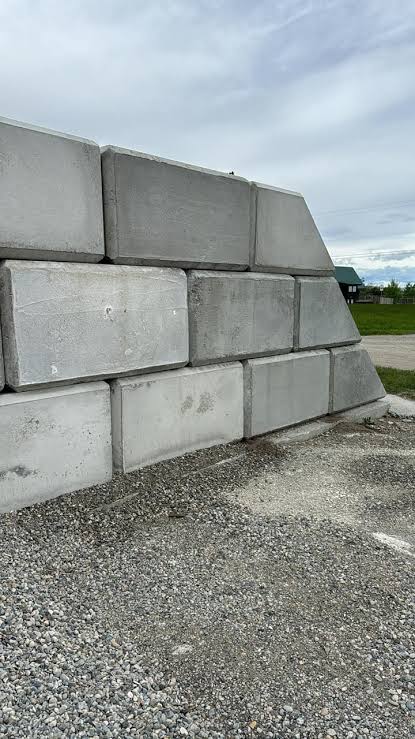
Once the spot is chosen, the homesite needs to be level enough for a foundation, a septic layout where required, a yard, and parking. On a slope that usually means cutting into the high side, filling the low side, or both, and a wall is what holds the low edge so the fill stays put. Eco blocks, big concrete blocks about 2 by 2 by 4 feet, are well suited to this work because they build a strong downhill edge quickly and give the new yard a clean, finished boundary. The wall also protects the homesite from the slow creep of soil that otherwise migrates downhill year after year in our clay ground.
Drainage decides whether a new homesite feels dry and solid or damp and unfinished. A fresh pad on a hillside intercepts water that used to sheet across the slope, and that water needs a planned route around the home, not through the yard. A swale above the cut, drainage behind the wall, and surface grading that falls away from the foundation all work together. Pay special attention to how the new driveway and roof lines shed water, because a new house adds a lot of roof area in exactly the spot where the grade just changed. Getting this right at build time is far easier than drying out a finished yard later.
Family land also brings practical questions that have nothing to do with blocks. Where exactly is the boundary of the new homesite, and how will it be handled on paper down the road? How will the new home share or separate driveways, utilities, and mail and emergency access? None of that changes how a wall is built, but it changes where the wall should go. Build the wall for the homesite as it will actually be used for decades, with room for a yard, a garden, a shed, and a second vehicle, rather than squeezing it tight against the house to save a few feet of wall today.
There is also the simple question of how the two homes live together. A wall and a change in grade can give each house its own sense of space without a fence, terracing the land so the new home sits on its own level with its own yard while the original home keeps its view and its routine. Plantings along the top of the wall, a top cap finish on the blocks, and a mowed strip at the base make the new site look settled quickly. In a year or two, most of these projects look like the land was always shaped that way, which is exactly the goal.
If your family is talking about a second homesite, start with a walk, a rough sketch, and honest measurements of the slope where the home would sit. Photos from the main house, from the road, and from the proposed pad help an estimator understand the project before anyone visits. Try the wall calculator on the site to size up the wall your homesite might need, or call (423) 358-2317 for a free estimate and a conversation about grading, drainage, and how the new place can sit comfortably on the land you already have.
Want to know what your wall takes? Run the wall calculator for a block count, then send your details for a free estimate — no pressure, no obligation.